
Last updated October 30, 2026
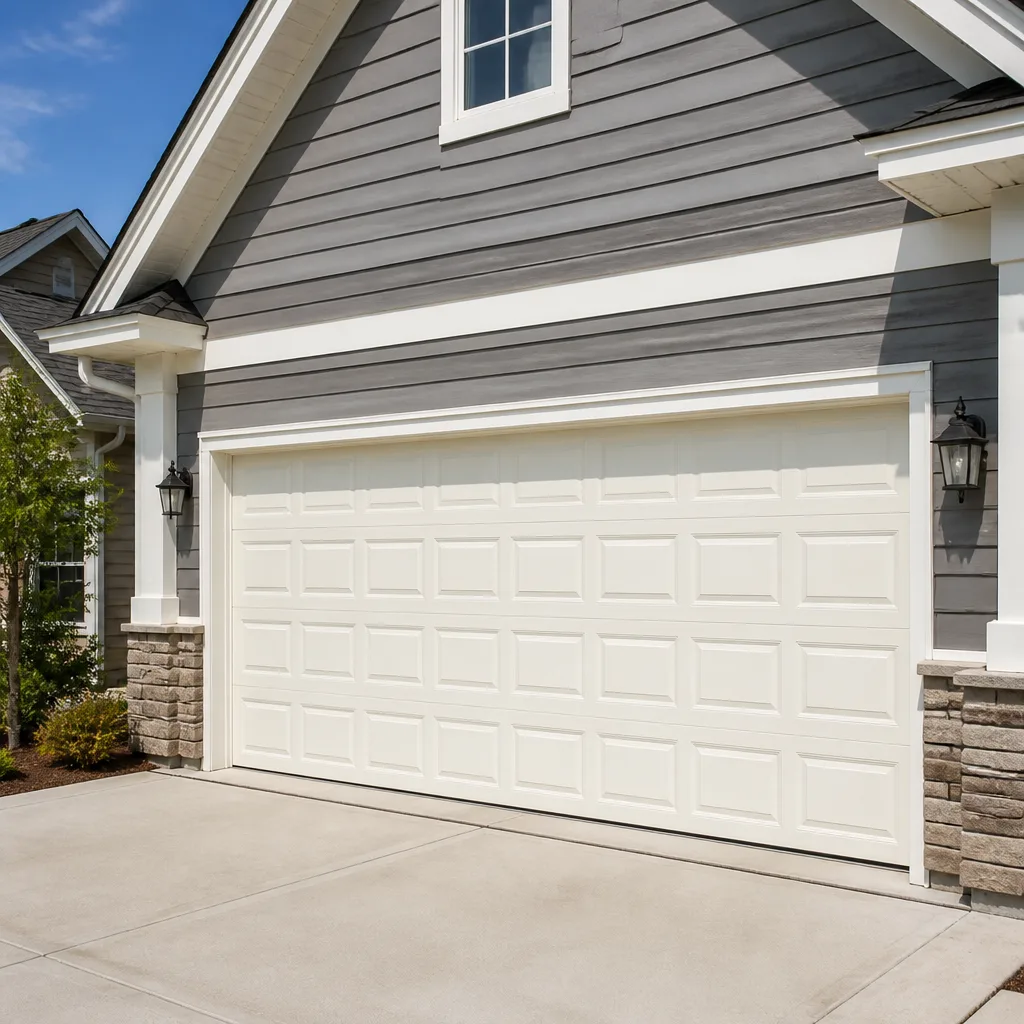 Raised-panel steel
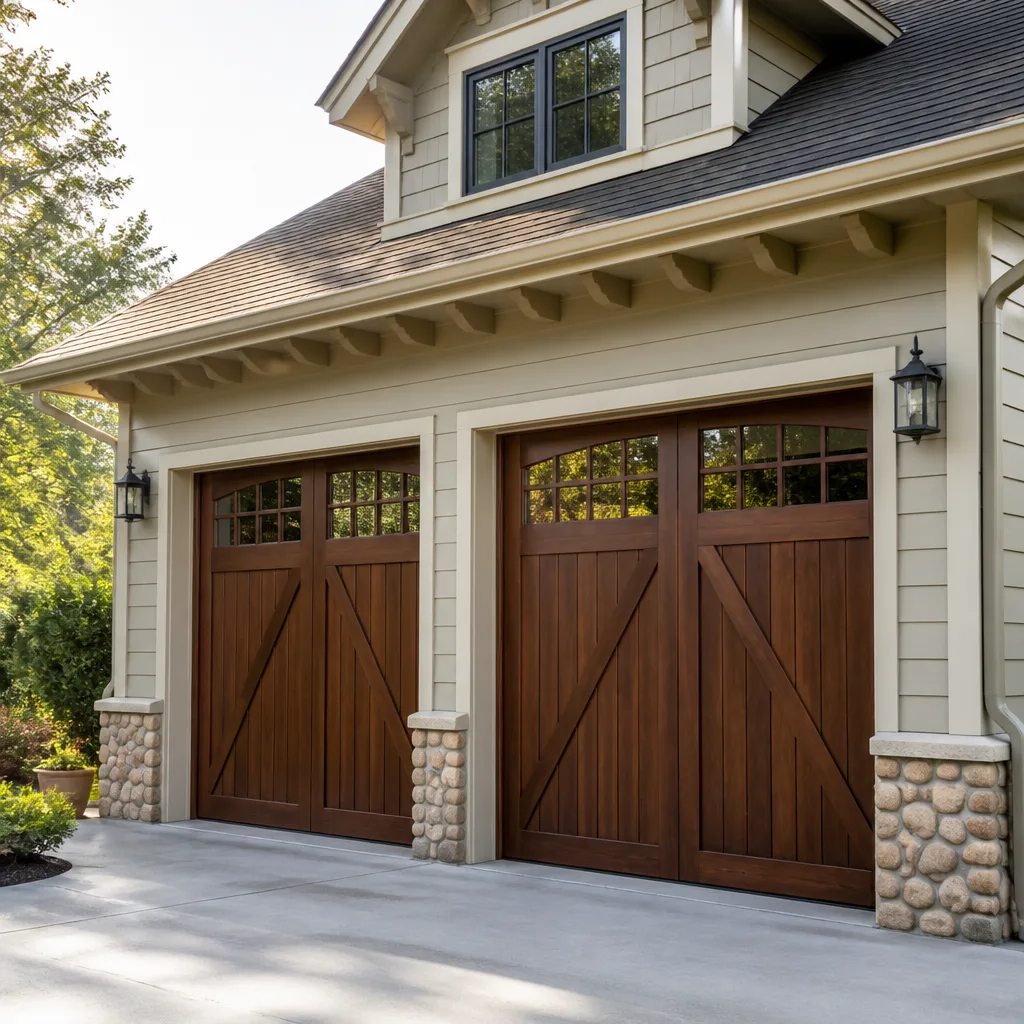 Carriage house
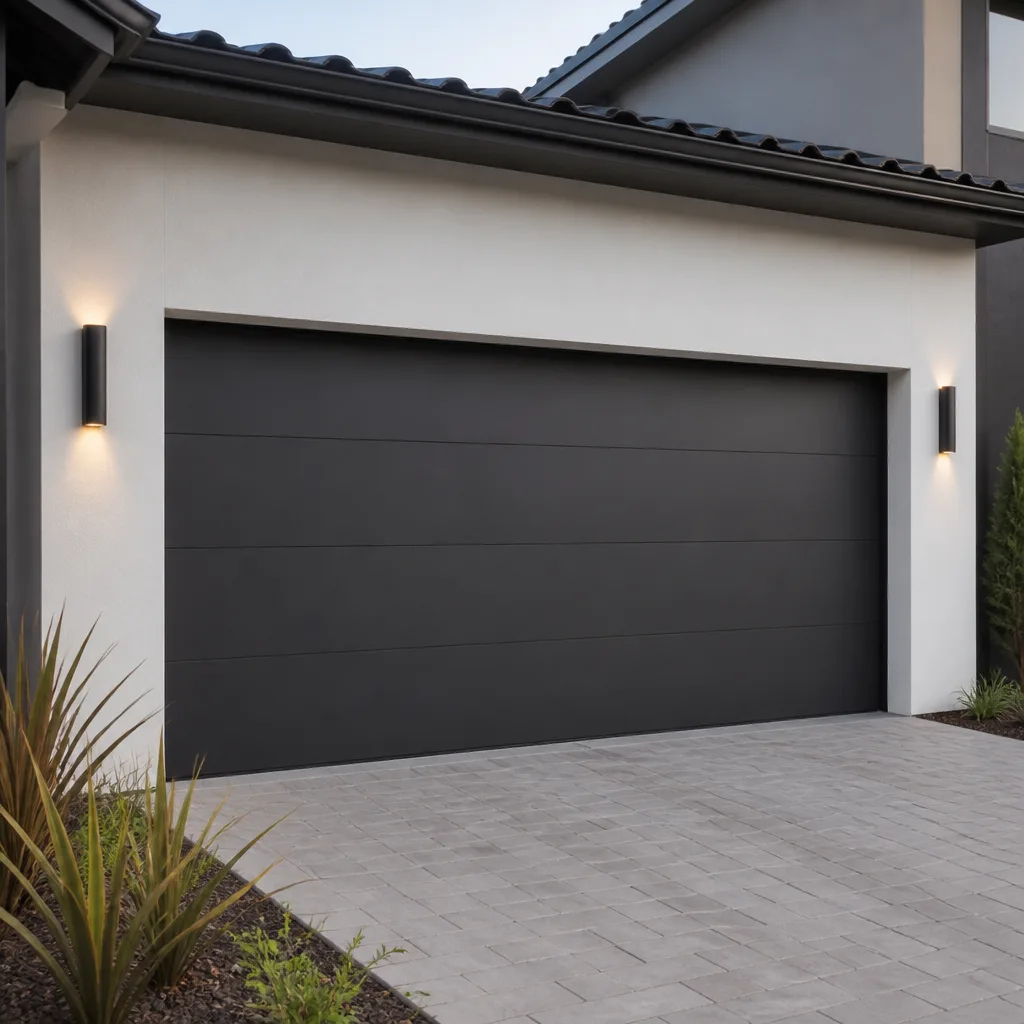 Modern flush
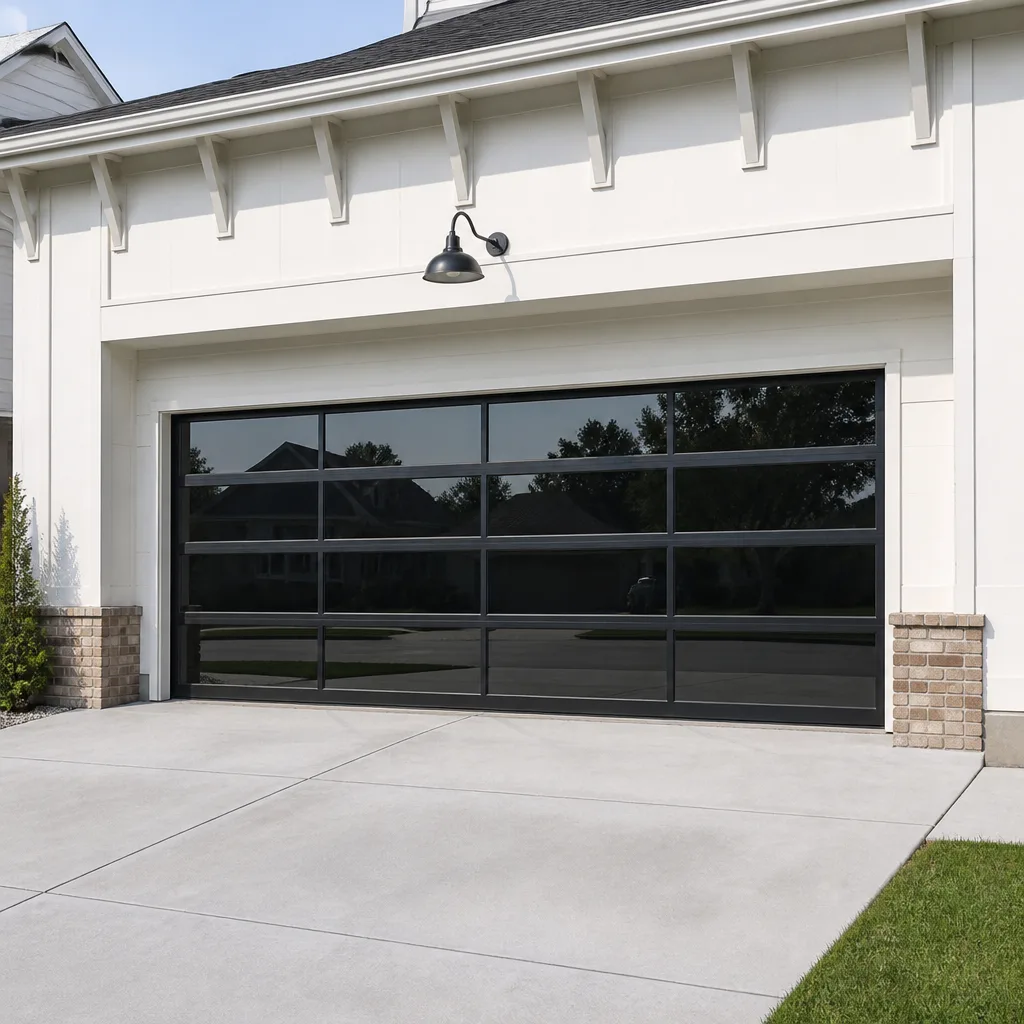 Full-view glass
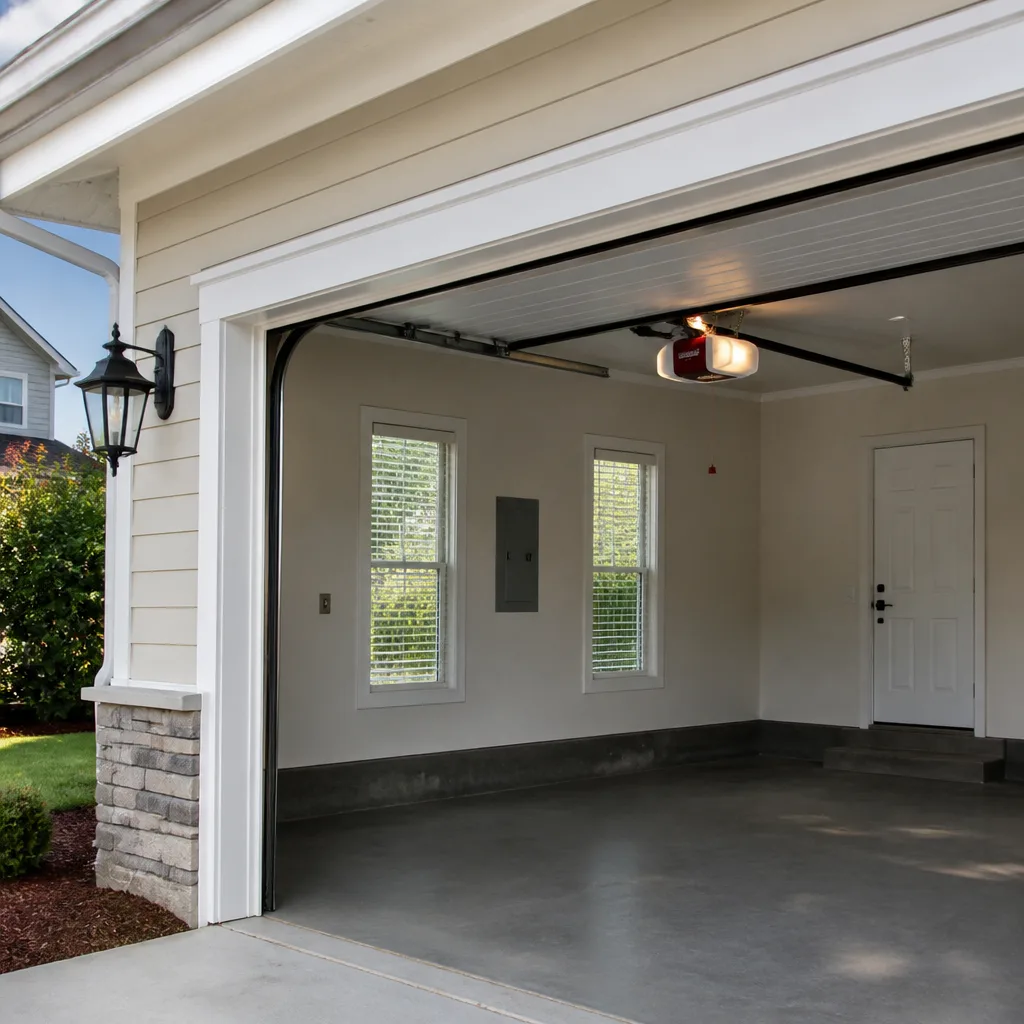 LiftMaster openers
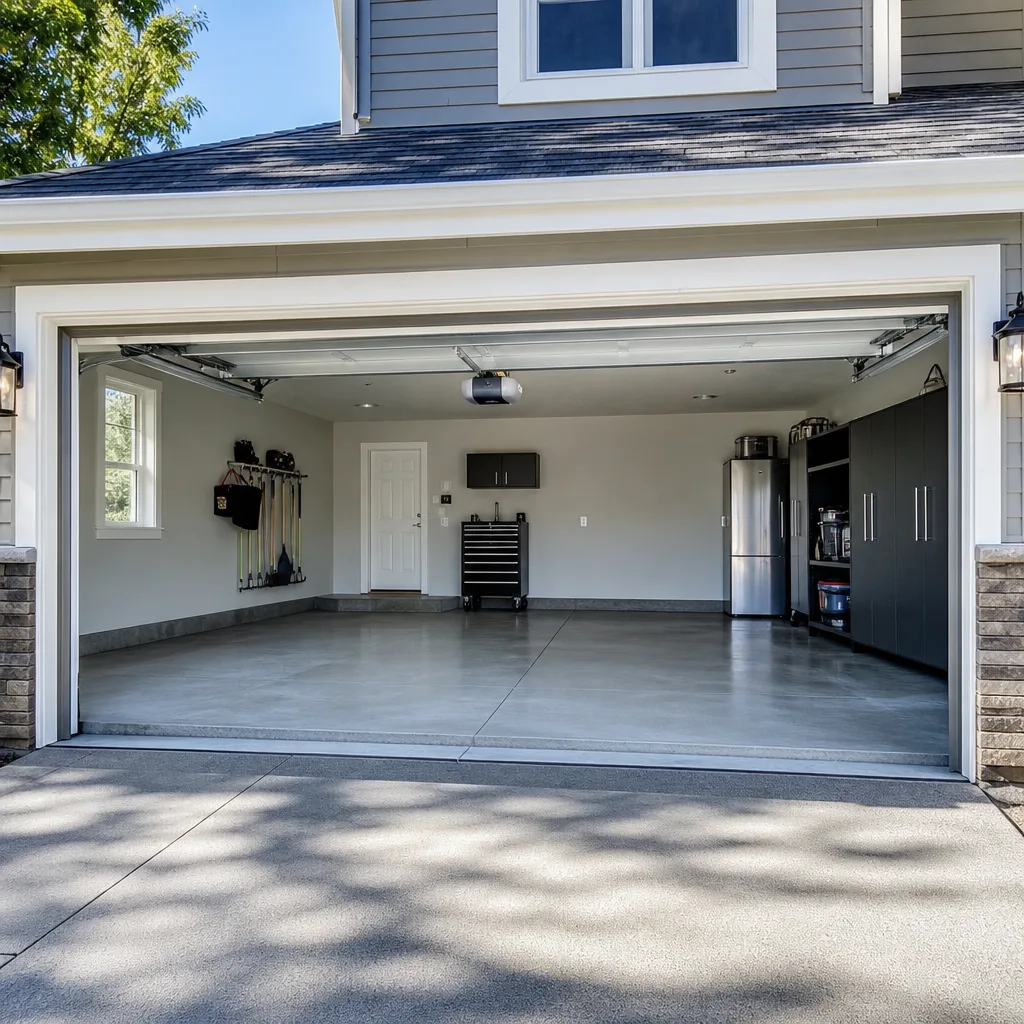 Chamberlain openers
Full 25-point door and opener safety check with every visit - springs, cables, rollers, tracks, and your LiftMaster or Chamberlain opener included
You get a price before we start. It does not change when the truck arrives.
Get your free estimateSeasonal Garage Door Care for Huntington Beach: Year-Round Homeowner’s Guide
Here’s a number that surprises most Huntington Beach homeowners: the six-week window from mid-October through late November accounts for roughly a third of all emergency garage door calls in coastal Orange County. The culprit isn’t age or poor installation. It’s the Santa Ana winds. A single strong gust can pull a marginally worn cable off its drum, leave a 160-pound door hanging on one side, and turn a Tuesday afternoon into a stranded-car situation. This guide—along with our The Complete Guide to Garage Door in Huntington Beach—breaks down the four real stress cycles that Huntington Beach garage doors face every year, what each one does to specific components, and what to check before each season peaks. You’ll finish with a season-by-season task card you can actually use, with time estimates included.
Styles & brands we work with
Quick Answer
Seasonal garage door care in Huntington Beach means adjusting your maintenance to four distinct coastal stress cycles rather than following a generic “inspect twice a year” routine. The biggest moves: check torsion springs and cables for rust every May before June Gloom humidity peaks, replace cracked weather seals in August after peak UV exposure, inspect cable drums and tighten bracket bolts before Santa Ana season in October, and watch for interior panel delamination during winter marine layer months. Each check takes under 30 minutes, and they’re spaced roughly 90 days apart.
Table of Contents
- Why Huntington Beach Has Four Garage Door Seasons (Not the Ones You Think)
- June Gloom (May Through July): The Rust Season
- Summer UV Season (August Through Early October): The Seal and Finish Killer
- Santa Ana Season (October Through November): The Wind Uplift Problem
- Winter Marine Layer (December Through April): The Condensation Cycle
- The Huntington Beach Seasonal Task Card (Print This)
- Common Mistakes to Avoid
- When to Call a Professional
- Frequently Asked Questions
- The Bottom Line
Why Huntington Beach Has Four Garage Door Seasons (Not the Ones You Think)
Conventional garage door advice gets written for places with snow, ice, and freezing temperatures. It tells you to lubricate rollers in the fall, check weather stripping before winter, and inspect springs in the spring. That advice is nearly useless in Huntington Beach. We don’t get ice on the tracks or salt on the roads. What we get is a repeating cycle of coastal humidity, intense UV exposure, and episodic high wind events, each of which attacks different components in different ways.
Here’s what we mean. The torsion springs above your door are under constant tension, and their steel is coated to resist corrosion. But that coating thins over time, especially on springs that are five years old or older. When June Gloom settles in and the relative humidity sits at 80 percent or higher for weeks at a time, micro-cracks in that coating invite rust. Rust on a high-tension spring isn’t a cosmetic problem. It creates stress risers, which are the exact points where springs snap. A spring that fails in July didn’t fail in July. It started failing in May when nobody looked at it.
Then comes summer. The UV index in Huntington Beach regularly hits 10 or 11 from late July through early September. That radiation doesn’t just fade paint. It embrittles vinyl weather seals and rubber bottom gaskets. A seal that flexed easily in June can crack like a potato chip by Labor Day. Once it cracks, you lose the thermal seal, dust gets in, and the door’s balance shifts slightly because the bottom gasket is no longer making even contact.
October brings the Santa Anas. These are offshore winds, meaning they blow from the desert toward the coast, and they hit garage doors from the exterior face. Most garage doors are engineered for vertical load, meaning the weight of the door itself. They’re not engineered for sustained lateral pressure. A 40-mph gust against a 16-foot-wide door generates hundreds of pounds of side load. If a cable has even a little slack because a drum is slightly misaligned, that gust can pop the cable off the drum entirely.
And through the winter, the marine layer sits low over Huntington Beach from December through April. Nights are cool enough that the interior surface of an insulated steel door can drop below the dew point. Condensation forms on the inside face. If the door’s interior vinyl layer has any micro-tears around the edges, moisture wicks into the panel core. Over multiple seasons, that’s how you get delamination: the interior skin separating from the insulation layer, usually starting at the bottom corners.
Each of these four stress cycles is predictable. That means each one can be mitigated with a season-specific check that takes less time than it takes to make coffee. The rest of this guide walks through exactly what to look for, in what order, and when to call a pro instead of grabbing a wrench. For deeper repair know-how, see our The Complete Garage Door Repair Guide for Huntington Beach Homeowners.
At Corner Post Garage Door Repair home, we’ve built our seasonal checklist around these four Huntington Beach stress cycles because they’re what we see on service calls every week. We don’t inspect for snow damage. We inspect for what this climate actually does to doors.
June Gloom (May Through July): The Rust Season
June Gloom in Huntington Beach isn’t just overcast skies. It’s a marine layer that parks itself over the coast for six to eight weeks, holding relative humidity above 80 percent for days at a stretch. The air temperature sits in the mid-60s, cool enough that metal surfaces never fully dry once condensation forms on them. For a garage door, this is the single most corrosive period of the year.
The component at highest risk is the torsion spring. Most modern torsion springs get a light oil coating or an epoxy paint finish at the factory. After four to five years of use, that finish develops hairline cracks from the constant flexing of the coil. Moisture gets into those cracks, rust forms, and the spring begins to weaken at that specific point. The failure is almost always at the rust spot. In coastal zip codes like 92646, 92647, and 92648, we see more spring failures in June and July than any other month, and the pattern is consistent: rust at the failure point that started weeks earlier.
Here’s the five-minute June Gloom pre-check:
- Open the garage door halfway and look up at the torsion spring. Use a flashlight. If you see any orange-brown staining, even specks, that’s active rust and the spring is compromised.
- Look at the cable ends where they attach to the bottom brackets. These are bare steel and take the brunt of coastal moisture. A frayed or discolored cable is a warning sign.
- Run your hand (with a glove on) along the inside bottom edge of the door. If it feels damp or cool to the touch in the morning, your door is collecting condensation, which means the steel hardware above is doing the same.
- Check the hinges. If you see rust streaks running down from any hinge pin, the pin is starting to bind, which means the door isn’t moving as freely as it should.
- Smell the garage. Musty odor means trapped moisture, which means you may have a ventilation issue that’s accelerating corrosion on every metal part.
If you want to be proactive during June Gloom, the most useful thing you can do is run the door once a day. A daily cycle redistributes the light oil inside the rollers and keeps the bearing surfaces from sitting in one position with moisture on them. It also gives you a chance to hear any new grinding or squealing before it turns into a broken part.
For Huntington Beach homeowners with Wayne Dalton doors, pay special attention to the bottom panel. Wayne Dalton’s TorqueMaster spring systems are internal, so you won’t see the spring itself, but the bottom panel on those doors is more prone to rust jacking at the seam than many other brands. For older Craftsman doors from the 1990s and early 2000s, the hardware was often zinc-plated rather than galvanized, which means rust moves fast once the plating wears through. If you’ve got a 25-year-old Craftsman door that’s been through 25 June Gloom seasons, the hinges are due for a close look.
Summer UV Season (August Through Early October): The Seal and Finish Killer
August in Huntington Beach delivers exactly what June Gloom withheld: relentless sun. The UV index routinely sits in the very high to extreme range, and garage doors are full-exposure surfaces. Unless your door faces north and sits under a carport, it’s taking six to eight hours of direct solar radiation every day from late July through September.
The first casualty is almost always the bottom weather seal. That rubber or vinyl strip along the bottom edge does three jobs: it keeps water out during winter rains, it keeps dust and sand out year-round, and it creates a thermal break between the garage slab and the door. After a few summers of intense UV, the material loses its plasticizer and turns brittle. The hairline cracks start at the outer edges where the seal wraps around the door corners. Once a crack opens up, it spreads. You’ll start seeing daylight under the door, then dust, then water when the first rain arrives in December. The door gets replaced every 15 years, but the seal should get replaced every 3 to 5 years, more often if the door gets full afternoon sun.
The second casualty is the door finish itself. For Amarr doors with polyurethane-insulated steel panels, the factory finish is a baked-on polyester coating that typically holds up well for 8 to 12 years before it starts chalking. But the edges and bottom panels take more abuse from reflected UV off concrete driveways. Once the coating chalks, the surface becomes porous, and the next June Gloom season’s moisture gets under the paint. The cycle compounds.
Here’s your August UV checklist:
- Kneel down and run a finger along the bottom seal. If it feels stiff instead of rubbery, or if you can press a fingernail into it and leave a mark that doesn’t bounce back, the seal has lost its elasticity.
- Close the door and look along the bottom edge from inside the garage. Any visible gap means the seal has compressed or cracked unevenly.
- Look at the exterior face of the door, especially the bottom two panels. Chalking shows up as a white, powdery residue that comes off on your hand. Fading you can live with; chalking means the coating is actively breaking down.
- Check the rubber seals on the exterior sides of the door, where vinyl weatherstripping meets the door edge. Sun exposure makes these curl, and a curled seal loses contact.
- If your door has windows, check the glazing compound or rubber gaskets around the glass. UV kills these too.
One practical step for summer: wash the door. A bucket of water with a mild automotive soap, a soft brush, and a rinse removes the salt film that accelerates UV damage on coastal doors. Do it in the morning before the surface gets hot. A clean door stays cooler, and a cooler door puts less thermal stress on the paint.
The other step is shade. If you have mature trees or there’s any way to shade the door during the peak afternoon hours, that’s genuinely useful for extending finish life. But realistically, most Huntington Beach garage doors face west or south and take the full brunt of it. That’s why the replacement seal is the smart money move in late August: for the cost of a bottom gasket, you prevent water and dust intrusion for the next three years.
Santa Ana Season (October Through November): The Wind Uplift Problem
The Santa Ana winds in Huntington Beach arrive with enough predictability to set a calendar by. They typically start in mid-October, peak in November, and taper off by early December. Gusts in the 40 to 60 mph range are common in the coastal corridor, and the terrain funnels them through the same paths every year. Garage doors don’t handle wind the way people think they do. The roof takes the brunt of the lift, but the garage door is the largest vertical surface on the front of the house, and a 16-foot-wide door acts like a sail.
Here’s what happens mechanically. Your door weighs between 150 and 250 pounds depending on size and insulation. The torsion spring system counterbalances that weight precisely. The lift cables run from the bottom brackets, up over the cable drums, and wind and unwind as the door operates. If everything is properly tensioned and the cables are seated correctly in the drums, the system works as a unit. But if a cable has stretched even slightly, or if a drum has shifted on the torsion tube, the cable tension becomes uneven between the left and right sides. A strong gust that hits the door face pushes the door sideways, even a fraction of an inch. On one side, the cable goes momentarily slack. A slack cable can jump the groove on the drum. When it jumps, that side of the door loses its counterbalance. The door hangs, or worse, it drops.
Bracket bolts are the second wind-related failure point. The bottom brackets that hold the cable ends are bolted to the bottom panel with two or four lag screws. Those screws are under constant tension from the cable. Over time, the holes in the steel panel can wallow out, especially on doors that have been through a few hard wind seasons. When the wind hits the door face repeatedly during a Santa Ana event, the panel flexes, and a loose bracket gets looser. We’ve seen bottom brackets tear clean off panels in Huntington Beach during November wind events, and it’s almost always on doors where the bolts were already loose before the wind started.
The October pre-wind check is the most important seasonal inspection of the year. Here’s the sequence:
- With the door fully open, examine both cable drums. The cable should be wound in neat, tight rows with no overlapping, no gaps, and no sign of the cable riding up toward the drum flange. If the cable looks even slightly off, don’t operate the door again until it’s been re-seated.
- Check the cable on both sides for fraying. Run your hand along the cable while wearing gloves. Any broken wire strand, any rough spot, any rust staining means the cable needs replacement before the wind season.
- Put a wrench on the bottom bracket bolts. Both brackets. Both bolts. If you can turn any of them with light pressure, they’ve loosened. Snug them down, but don’t crank them: the panel is steel over foam or wood, and over-tightening strips the hole.
- Check the roller stems. In high wind, the rollers take lateral load. A roller with a worn stem can pop out of the hinge under gust pressure. If any roller stem shows visible wear or the roller wheel wobbles, it’s time.
- Check the top strut. If your door has a reinforcement strut across the top panel, look for any signs of bowing or detached hardware. That strut is the door’s main defense against wind flex.
We don’t recommend DIY cable or spring work. Torsion systems store enough energy to seriously injure someone who doesn’t work on them daily. The pre-wind check is a visual and bolt-tightening exercise a homeowner can handle. Anything involving a cable that’s off its drum, a spring that looks uneven, or a bracket that’s pulling loose is a call-day situation.
For Raynor doors, the cable drum design is a little different from most: the drums are typically cast aluminum with a deeper groove profile, which helps with cable retention. But Raynor doors have their own wind quirk. The bottom brackets attach differently, and we’ve seen those specific brackets work loose faster in Santa Ana cycles than on comparable doors from other brands. If you have a Raynor and it’s more than ten years old, check the bottom brackets monthly through October and November.
You can also just drive down any Huntington Beach neighborhood during the first big Santa Ana of the season and count the garage doors with traffic cones in front of them. The ones with cones are the ones that skipped the October check.
Winter Marine Layer (December Through April): The Condensation Cycle
Huntington Beach winters aren’t cold by national standards, but they are damp. The marine layer that parked offshore during June Gloom returns in the winter, except now it arrives with lower temperatures and occasional rain. Nighttime lows in the 40s are common from December through February, and the garage air temperature often drops enough for condensation to form on the inside face of the door.
Here’s the problem with insulated doors and condensation. An insulated steel door is a sandwich: steel skin on the outside, steel or vinyl skin on the inside, and a polyurethane or polystyrene core in between. The interior skin has a factory-applied vinyl or powder-coated finish. Around the edges of each panel, where the skin wraps the core, there are seams. After years of temperature cycling, those seams develop micro-gaps. When condensation forms on the interior face and runs down, water finds those gaps and seeps into the core. Over time, the glue that bonds the skin to the core breaks down. The skin starts to separate. The first visible sign is soft spots near the bottom corners of the panels, followed by visible bubbling or peeling of the interior finish.
This doesn’t happen in one winter. It’s a cumulative process that takes several seasons. But the damage is permanent once it starts, because the foam core never fully dries out inside the door once it’s saturated. The panel becomes heavier, the door balance shifts, and the opener motor works harder. On doors with Amarr or Clopay construction, the foam core is dense and the initial seal is good, but Huntington Beach’s humidity eventually finds the weak points.
Your winter check has two goals: catch condensation early and keep it from becoming a standing water problem.
- On a cold morning, before you run the door, feel the interior face. If it’s wet or clammy, condensation is active. Wipe it down with a rag. Repeated condensation cycles are the issue.
- Check the interior seams on every panel, especially the bottom two. Press on the corners. Soft spots, bubbling, or any oil-canning (the panel flexes in and out when pressed) indicates the core has taken on moisture.
- Look at the garage floor where the door closes. If you see water stains or puddling along the inside edge of the threshold, the bottom seal isn’t doing its winter job.
- Check the weather stripping along the sides of the door opening. A gap here lets cold, damp air in and makes the condensation worse.
- If you park wet cars in the garage, crack the garage door a few inches for 20 minutes after parking to let the moisture escape. A garage that traps car-evaporated water is a condensation incubator.
The other winter-specific issue in Huntington Beach is the first heavy rain of the season, which usually arrives in December. If you skipped the August bottom seal replacement, this is when you find out. Rain driven against the south-facing door by onshore winds finds every gap. A door that seals properly keeps the water out; a door with a cracked seal lets it puddle inside the garage, and then you’re dealing with rust on the tracks and water stains on the panels.
For homes in the 92646 and 92648 zip codes closer to the beach, the marine layer is thicker and the condensation cycle runs longer than in the inland parts of Huntington Beach. If you’re within half a mile of Pacific Coast Highway, your door gets more of everything: more salt, more moisture, more condensation. The same door in the same condition will degrade faster on the west side of town than on the east side. We adjust our recommendations accordingly.
The Huntington Beach Seasonal Task Card (Print This)
Here’s the whole year on one card. Each task is timed to the stress cycle it addresses. Total time across the year: under two hours. Total cost if you catch things early: minimal. Total cost if you skip a season: a lot more.
May (before June Gloom peaks)
- Inspect torsion springs for rust staining. Time: 3 minutes.
- Check cables for fraying and rust. Time: 2 minutes.
- Run the door once and listen for new noises. Time: 1 minute.
- If rust is present, schedule a spring and cable inspection. Time: phone call.
August (before peak UV damage)
- Test bottom seal for flexibility. Time: 1 minute.
- Replace bottom seal if cracked or stiff. Time: 30 minutes if you’re handy, or call.
- Wash the door face. Time: 20 minutes.
- Check side weather stripping for curl. Time: 2 minutes.
October (before Santa Ana winds)
- Inspect cable drums with door open. Time: 3 minutes.
- Torque-check all bottom bracket bolts. Time: 5 minutes.
- Check roller stems for wear. Time: 3 minutes.
- If cables show ANY fraying or misalignment, call a professional. Do not operate the door.
December (before first heavy rain)
- Check bottom seal after first rain. Time: 1 minute.
- Feel interior panel face for condensation. Time: 2 minutes.
- Press interior panel corners for soft spots. Time: 2 minutes.
- Check threshold for water intrusion. Time: 1 minute.
That’s the entire year. None of these require special tools beyond a flashlight, a wrench, and a rag. None require touching the torsion spring. The goal is early detection, not repair. When you find something that’s out of spec, that’s when you call Garage Door Repair in Cudahy or wherever the professional is: someone who can re-seat the cable, replace the spring, or swap the seal before the problem graduates from maintenance to emergency.
Common Mistakes to Avoid
- Lubricating with WD-40. WD-40 is a water displacer, not a garage door lubricant. It strips the existing lubrication and leaves metal parts dry. Use a silicone-based or white lithium grease on rollers, hinges, and bearings. This mistake is more common than any other single error we see in Huntington Beach garages.
- Waiting until the door stops working to inspect it. By the time a spring snaps or a cable comes off the drum, the damage has happened. The inspection is supposed to happen 60 to 90 days before the part fails. The Santa Ana wind event doesn’t break your door; it finishes what six months of neglect started.
- Replacing only one spring when one breaks. Torsion springs have a rated cycle life, and they wear as a pair. If one snaps at 10,000 cycles, the other is at 10,000 cycles too. Replace both or you’ll be back in the garage in a few months doing it again.
- Ignoring a noisy door because it still works. A garage door that grinds, squeals, or rattles is telling you something specific. A squeal is usually a dry roller bearing. A grind is usually a worn hinge or a panel dragging. A rattle that comes and goes with the wind is usually a loose bracket. Each sound maps to a part, and each part is cheaper to fix before it fails.
- Pushing the opener button repeatedly when the door won’t open. If the door is stuck and you keep hitting the opener, the motor tries to lift against a jam and you add another failure to the list. One attempt. If it doesn’t move, stop and look. If the problem isn’t obvious, call.
- Letting a handyman with no garage door experience touch the spring. Torsion springs are under hundreds of pounds of tension. A generalist who doesn’t know the specific winding procedures for different brands can get hurt, and can damage the door in the process. This is not a gate fence repair. It’s a spring under tension.
- Waiting until sale time to replace a 20-year-old door. Doors don’t fail on a schedule. If the panels are delaminating, the tracks are rusted, and the opener is original to the Clinton administration, you’re better off planning the replacement than nursing the old one through another coastal winter. Garage Door Installation in Cudahy page has the full rundown on what replacement involves.
When to Call a Professional
Some things on a garage door are homeowner jobs. Some are not. If you see a cable that’s off the drum, don’t touch it. If a spring is snapped, don’t touch it. If the door is hanging unevenly and you can see the problem is at the torsion tube or the brackets, don’t touch it. These are stored-energy failures. The spring assembly holds enough force to lift a car door, and releasing that force improperly is how people get seriously hurt. The rule is simple: if the problem involves the spring, the cable drums, or any part under tension, call a professional who works on these systems every day. That includes any time you see a gap in the spring coils, a cable with multiple broken strands, or a bracket that has pulled away from the panel.
Also call if you’ve done the seasonal checks and you’re not sure what you’re looking at. For year-round maintenance tips, explore our more guides & resources. A quick professional look is cheaper than an emergency repair. Corner Post Garage Door Repair offers free estimates in Huntington Beach, and we’ll tell you honestly whether something needs attention now or can wait another season. Call (833) 620-3836 to schedule a look. We work on all eight major brands, so the answer won’t be “replace the whole system” if the right answer is a $40 seal and a cable adjustment.
Frequently Asked Questions
Twice a year, once in May before June Gloom and once in October before the Santa Anas. Use a garage door-specific lubricant or white lithium grease on the hinges, roller bearings, and torsion spring. Avoid spraying lubricant on the track itself; the track is not a friction surface.
Yes. Salt deposits on metal components accelerate corrosion anywhere from half a mile to two miles from the coast depending on wind patterns. Doors within sight of PCH typically show rust on springs and cables two to three years earlier than doors in the inland parts of the city. Washing the door face and wiping down visible hardware during the summer helps, but the real mitigation is catching rust early before it compromises the spring.
Because wind pushes the door sideways, which momentarily unloads one cable. If the cable has stretched slightly or the drum has shifted, that momentary slack is enough for the cable to jump the groove. A properly tensioned cable with even tension on both sides can usually ride out the gust. The October cable drum inspection is the preventive step.
A standard torsion spring is rated for roughly 10,000 cycles, which for most Huntington Beach households translates to 7 to 10 years. Coastal moisture can shorten that because rust creates stress concentration points. If your springs are more than 7 years old and you’re seeing rust, start planning for replacement. It’s a scheduled job, not an emergency, if you catch it in time.
You can if you’re comfortable with basic wiring and assembly, but garage door openers involve settings that affect force and travel limits. Setting the force too high can cause the door to push through an obstruction, and setting the travel wrong can cause the door to reverse or not close fully. Many Huntington Beach homeowners do the install and then call us to set the limits and test the safety reversal. If you want it done right the first time, Garage Door Opener Repair in Cudahy covers the full range of opener service.
Late spring or early fall. April and May avoid the June Gloom moisture that can affect installation adhesives, and September avoids both the summer heat and the Santa Ana winds. Replacing a door in late summer means it’s installed before the winter rains start. Timing the replacement to the season means the new door’s first year isn’t spent fighting its harshest exposure.
Stop operating the door and look at the hinges and roller stems. Grinding usually means metal-on-metal contact somewhere in the track system, often a hinge pin that’s seized or a roller that’s worn through its bearing. Continued operation will chew up the track and the hinge. If the hinge is the problem, a replacement hinge is cheap. If you can’t identify the source in a few minutes, call (833) 620-3836 and we’ll diagnose it.
Press on the interior face of the bottom two panels with your thumb. If the surface flexes or you feel soft spots, the foam core has likely absorbed moisture and the skin is separating. Visible bubbling, peeling, or oil-canning is the end stage. Delamination is a replacement issue once it starts; the panel can’t be re-bonded in place. Catch it early by checking for condensation during the winter months.
The Bottom Line
Huntington Beach garage doors don’t fail randomly. They fail in predictable seasonal patterns, and the three-week window before each season peaks is when a smart homeowner does the check that prevents the failure. May before June Gloom: look for rust. August before the UV peak: test the seals. October before the Santa Anas: inspect cables and torque bolts. December before the first heavy rain: check for condensation and water intrusion. Four checks. Under two hours total. The alternative is the call nobody wants to make: the door stuck open at 9 PM in November, the cable hanging, the car trapped inside. The seasonal pattern is real. The task card is free. The only question is whether you use it.
If you find something during any of these checks that you’re not sure about, or if you’d rather have a professional look at the whole system before the season turns, give us a call. We offer free estimates in Huntington Beach and we’ll give you a straight answer about what needs attention and what can wait. Call (833) 620-3836 to schedule a seasonal check. We quote the price before any work starts, so you’ll know exactly what you’re paying for before we touch the door.
Written by the team at Corner Post Garage Door Repair, serving Huntington Beach since 2015.
See the difference
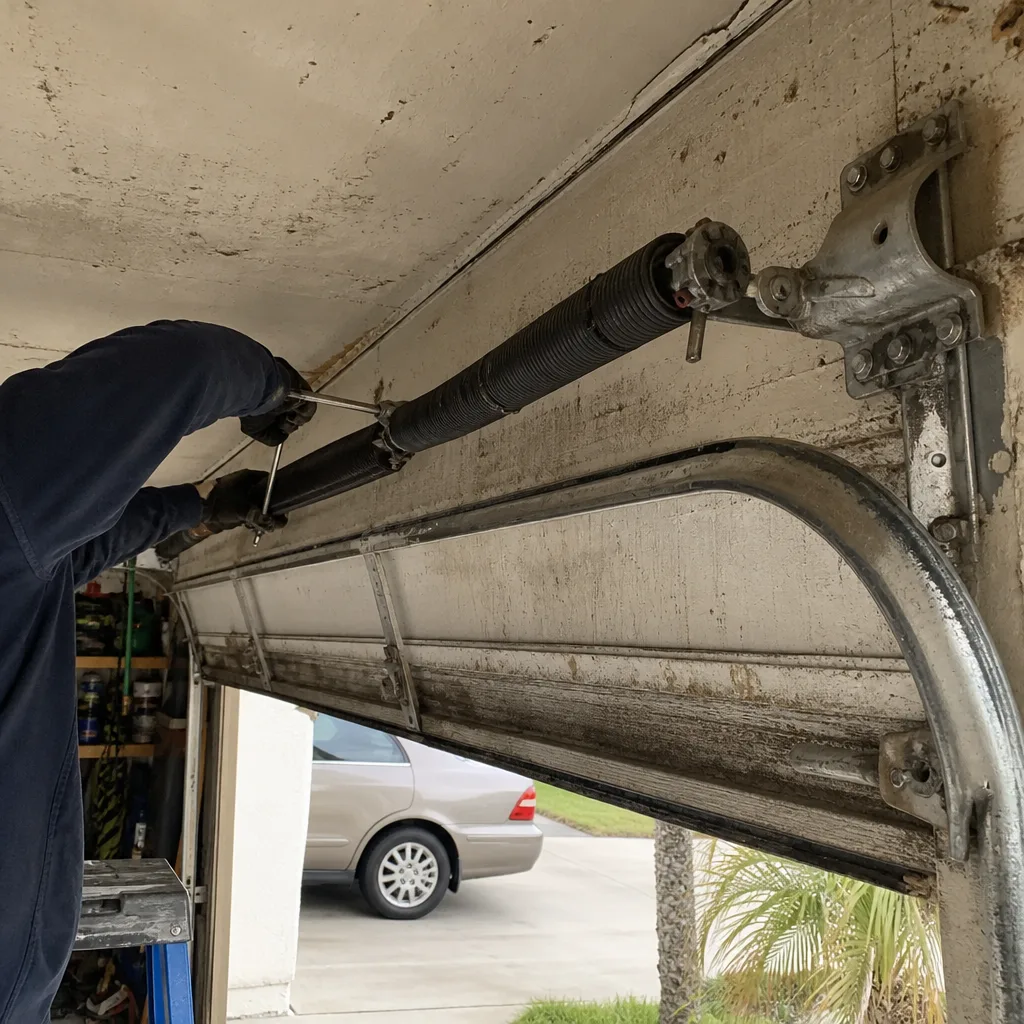 Before
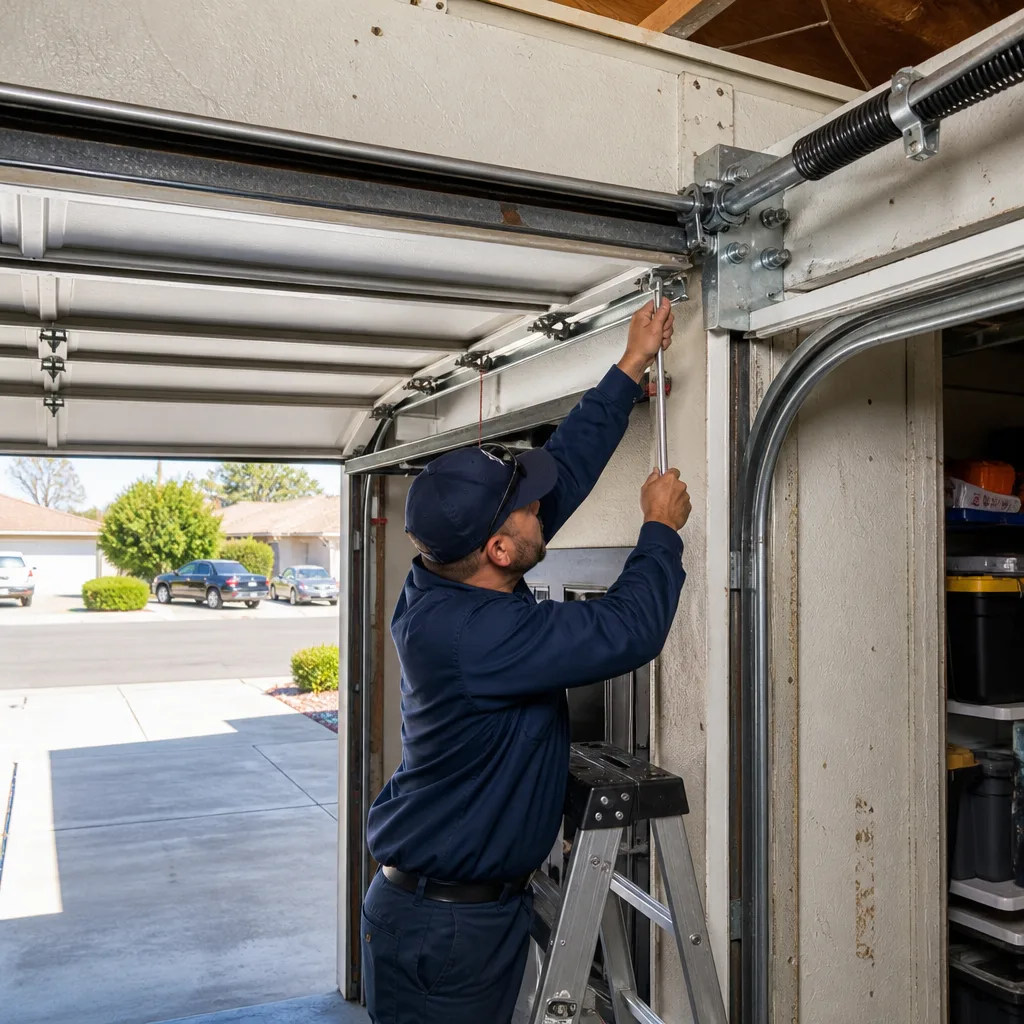 After
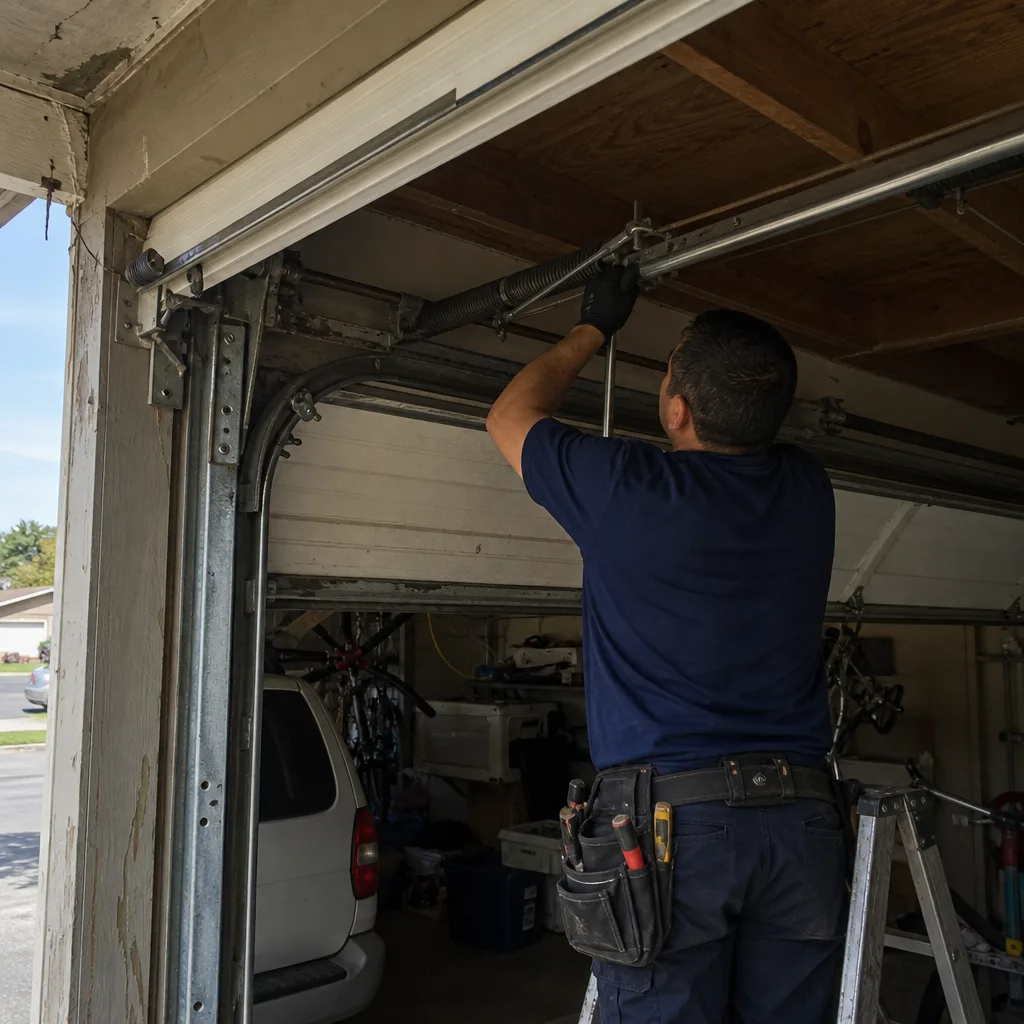 Before
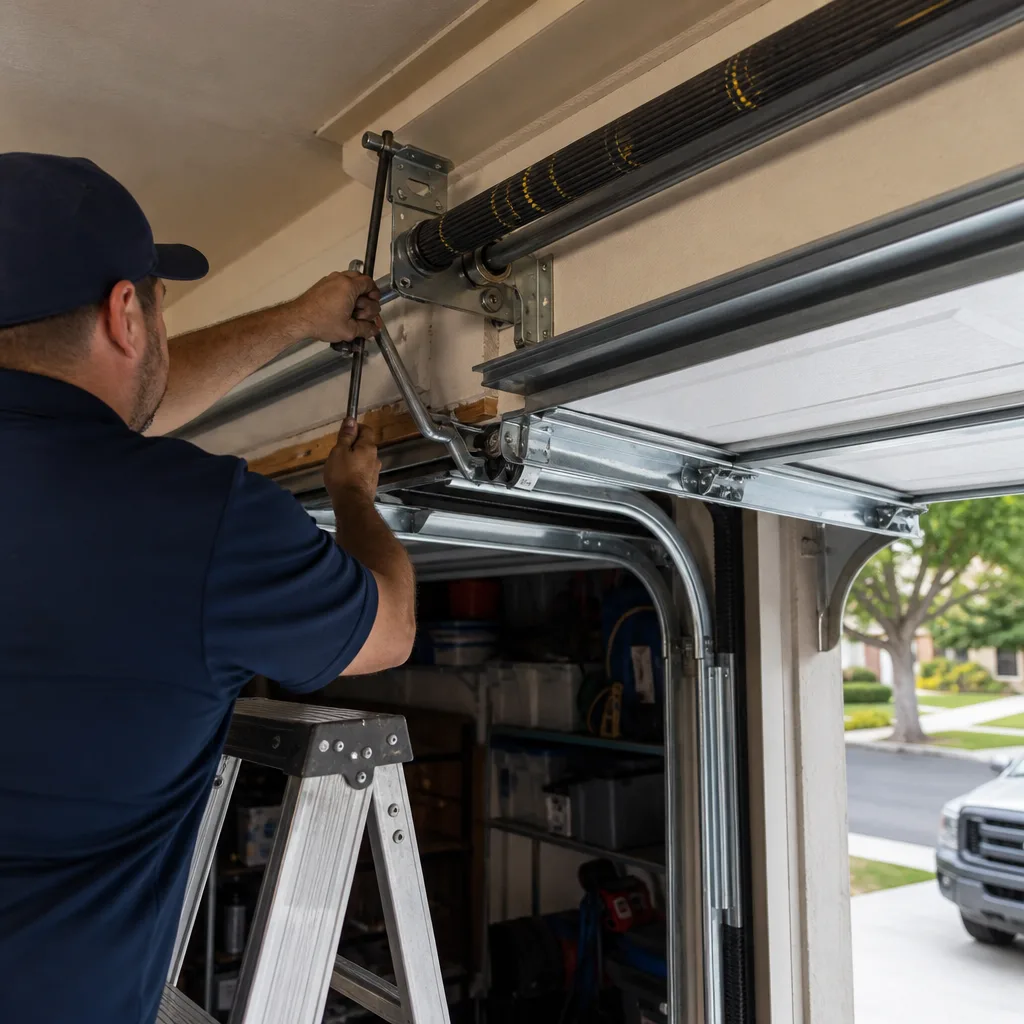 After
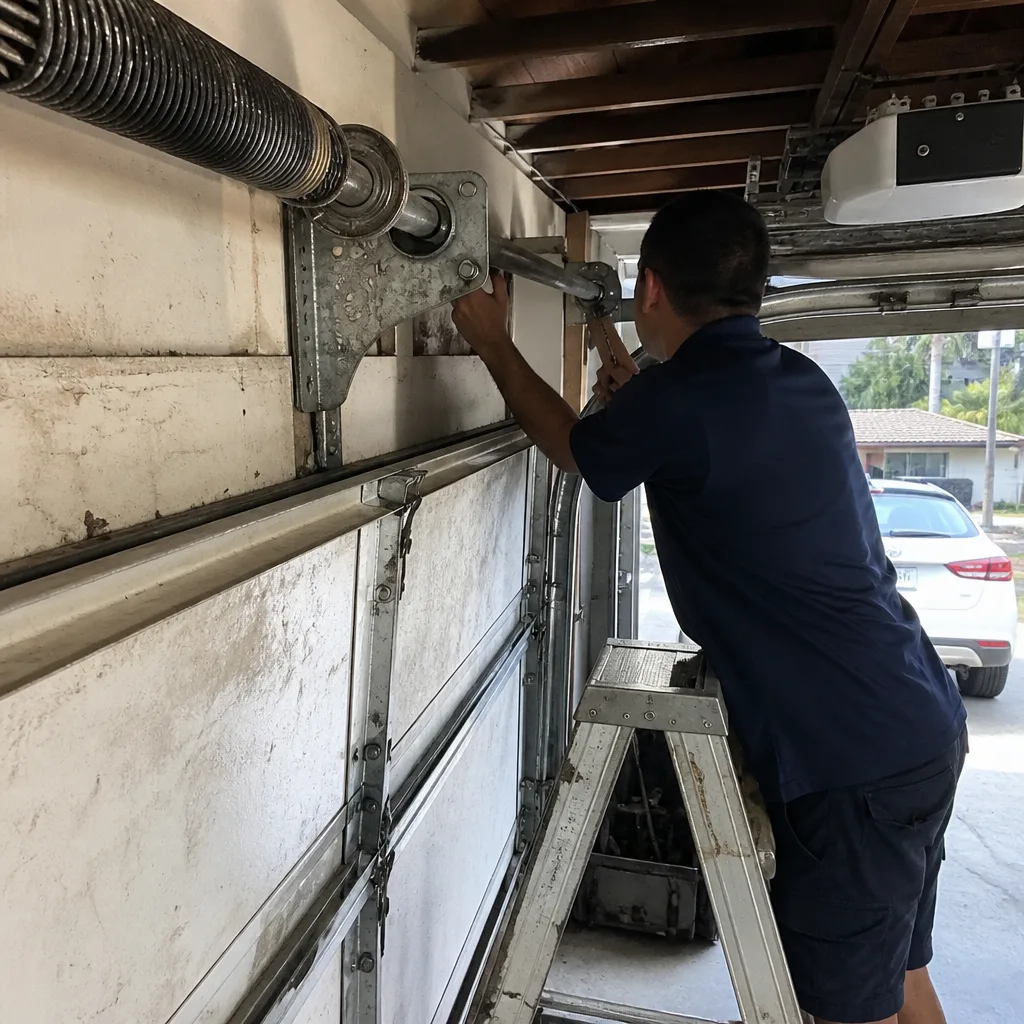 Before
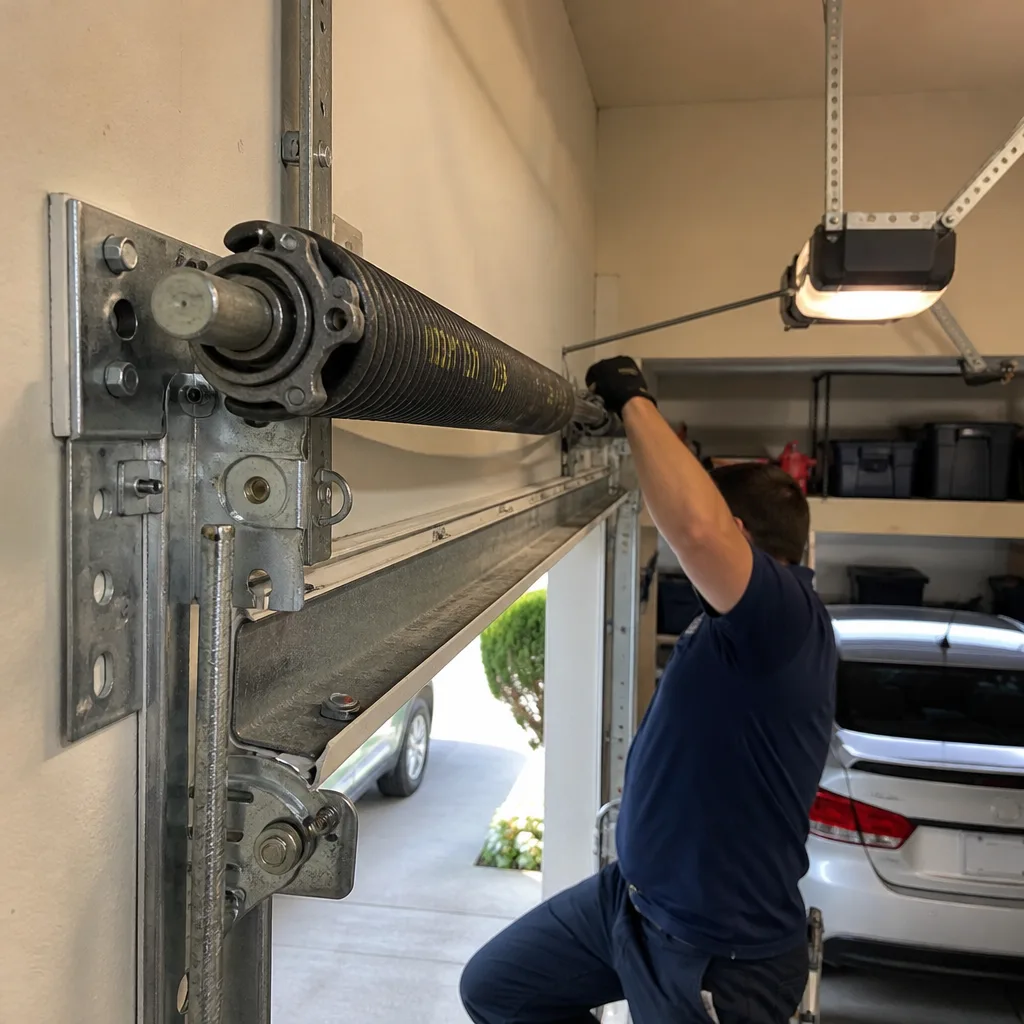 After