
Last updated October 30, 2026
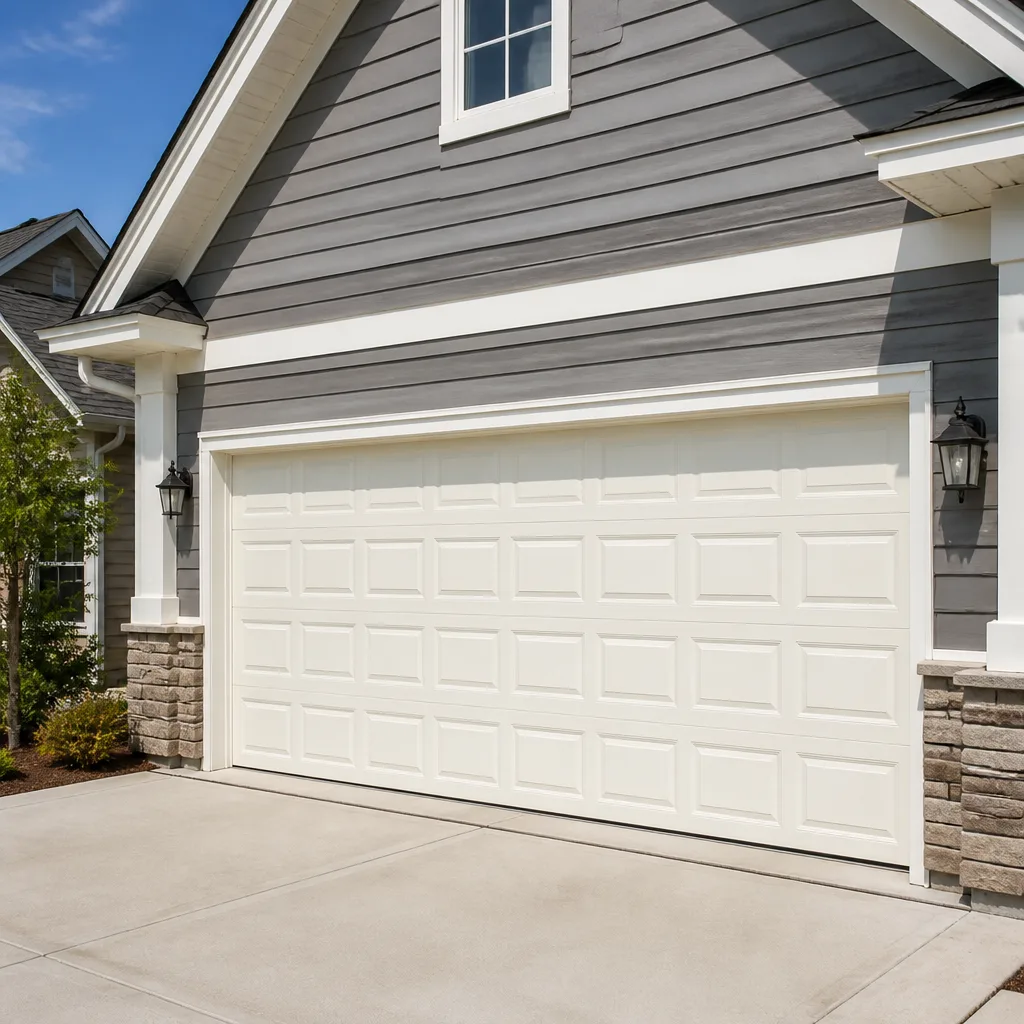 Raised-panel steel
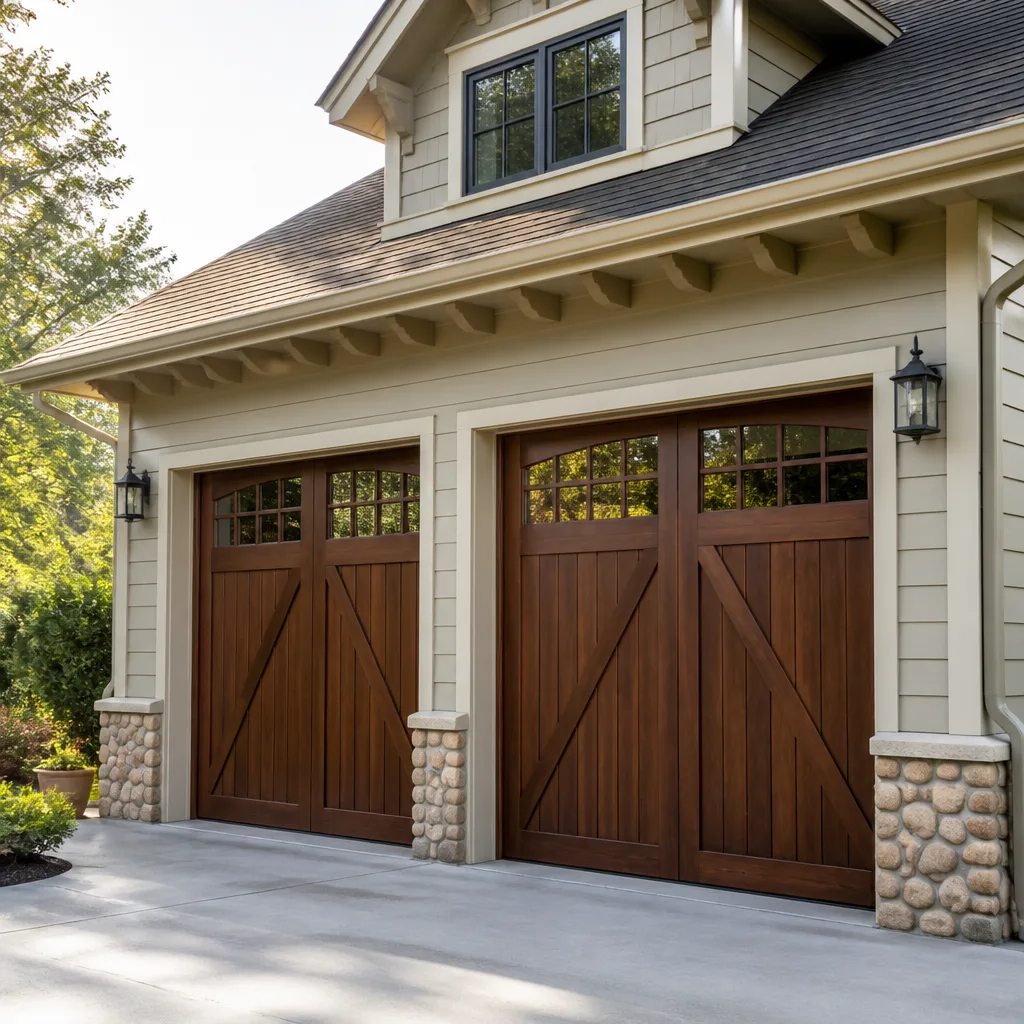 Carriage house
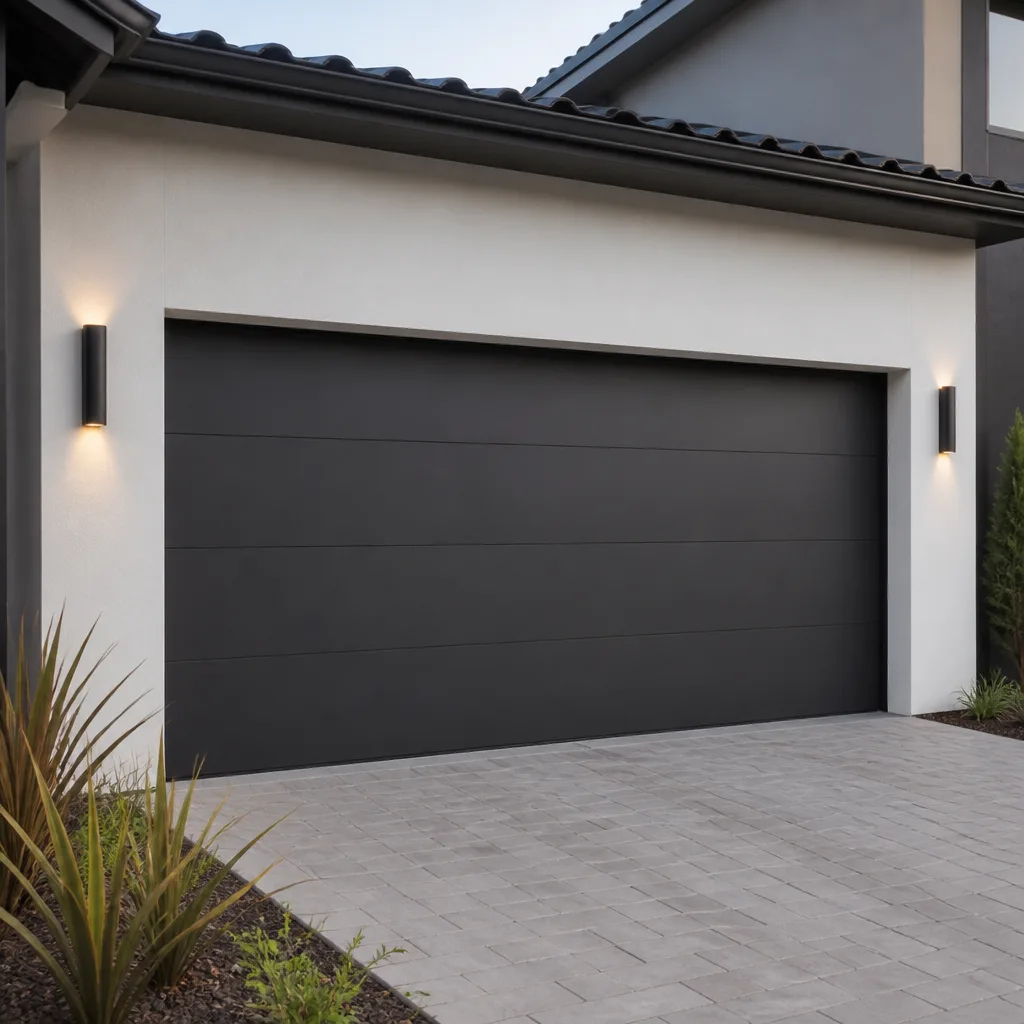 Modern flush
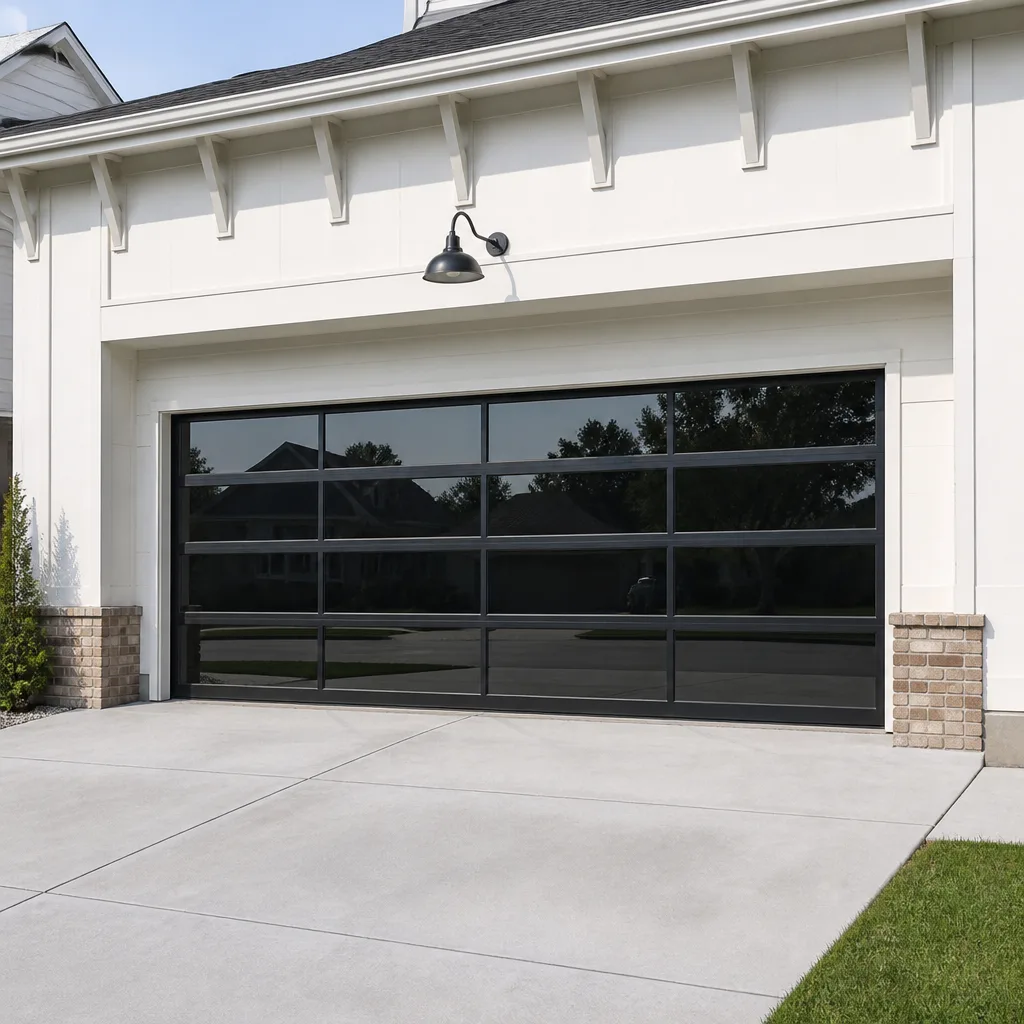 Full-view glass
 LiftMaster openers
 Chamberlain openers
Full 25-point door and opener safety check with every visit - springs, cables, rollers, tracks, and your LiftMaster or Chamberlain opener included
You get a price before we start. It does not change when the truck arrives.
Get your free estimateGarage Door Warning Signs: A Huntington Beach Homeowner’s Reference Guide
A grinding noise during operation is the warning sign everyone knows. The one almost nobody acts on: a garage door that opens 2 to 3 inches slower than it did six months ago. That speed loss is the first measurable sign of spring fatigue, and it precedes a full spring failure by weeks, not months. In Huntington Beach, where salt air accelerates wear on every metal component, catching these early signals matters more than it does inland. This guide covers what to look for, what to listen for, and when a Huntington Beach garage door needs professional attention before a nuisance becomes a breakdown. For more guides & resources, visit our blog.
Quick Answer
The most common garage door warning signs in Huntington Beach are slow or uneven movement (spring fatigue), grinding or squealing sounds (bearing or roller wear), visible rust on springs or bottom brackets (accelerated by coastal salt air), a door that reverses mid-cycle, and deteriorating weather seals. Any of these, caught early, usually means a repair measured in the low hundreds instead of a replacement measured in the thousands. If your door moves slower than it did six months ago, call a professional this week, not next month.
Styles & brands we work with
Table of Contents
- The Slow Door: Spring Fatigue You Can Measure
- What That Sound Actually Means: Grinding, Squealing, and Popping
- Rust in Huntington Beach: Cosmetic vs. Structural
- Salt Efflorescence: The Coastal Warning Sign Nobody Mentions
- Why Your Door Reverses Mid-Cycle: Sensors vs. Track Deflection
- The 30-Second Dollar Bill Test for Weather Seal Integrity
- Panel Warp and Humidity: When Sticking Isn’t a Hardware Problem
- Opener-Specific Warning Signs: What the Motor Tells You
The Slow Door: Spring Fatigue You Can Measure
Most Huntington Beach homeowners notice a broken spring the moment it snaps. What they miss is the four to six week run-up before the break. Torsion springs lose tension gradually as the steel fatigues. The door still opens. It still closes. It just does both slower than it used to. That speed loss is the earliest reliable warning sign of spring failure, and it’s measurable with nothing more than a stopwatch.
Here’s the test. Time your garage door from fully closed to fully open with the opener doing the work. A healthy residential door in Huntington Beach takes between 10 and 14 seconds to complete a full cycle. If your door now takes 16, 18, or 20 seconds, the springs are carrying less of the load. The opener motor is compensating. That means the motor is working harder than it was designed to, which shortens its life too.
What to check:
- Opening speed: Time a full open cycle. Compare it to what you remember from six months ago. Slower means spring fatigue.
- Closing speed: A door that drops faster than it used to on the way down, then slams the last few inches, suggests the springs are no longer counterbalancing the door weight properly.
- Uneven movement: If one side of the door rises before the other, you may have one spring carrying more load than its partner. On a double-spring system, one broken spring can go unnoticed because the remaining spring keeps the door moving, but at a dangerous imbalance.
- Opener strain: A motor that sounds like it’s working harder, running hotter, or pausing briefly mid-cycle is laboring against fatigued springs.
In our experience across Huntington Beach, spring fatigue shows up sooner in homes closer to the water. The salt air accelerates micro-corrosion on the spring coils, which creates friction points, which hastens fatigue. A spring set that lasts eight or nine years in Fountain Valley might last six or seven in a house three blocks off Pacific Coast Highway. If you’re noticing a slower door, don’t wait for the snap. Call for a spring inspection. A spring replacement is straightforward and affordable compared to a door that crashes down when the second spring fails.
What That Sound Actually Means: Grinding, Squealing, and Popping
Every garage door makes some noise. The useful skill is separating normal operational sound from the specific noises that map to specific failing components. Not every sound means “needs lubrication,” and spraying lubricant at a grinding noise without identifying the source can mask a problem that’s getting worse underneath.
Here’s the sound-to-component map we use when diagnosing doors in Huntington Beach:
- Grinding (metallic, consistent): This is almost always a bearing or roller failure. The rollers on a garage door have internal ball bearings. When the bearings wear out, the roller stops rolling and starts sliding against the track. That’s the grind. On Huntington Beach doors, salt air corrodes the roller bearings faster than inland. A grinding roller left unrepaired will eventually score the track itself, turning a $15 roller replacement into a track replacement.
- Squealing (high-pitched, intermittent): Squealing typically points to either a dry bearing or a misaligned track where metal is rubbing against metal. If lubrication changes the pitch but doesn’t eliminate the squeal, you have an alignment issue. Squeals that persist after lubrication are a sign the component has already worn past the point where lubricant can help.
- Popping (sharp, during movement): Popping is often a section hinge that’s binding, or a roller passing over a dented or misaligned section of track. It can also be a torsion spring shifting slightly on its shaft, which is a precursor to more serious spring issues. A popping noise that happens at the same point in every cycle tells you exactly where to look.
- Rattling (loose, irregular): Loose hardware, usually. Bolts and brackets on a garage door take vibration with every cycle. Over time, especially on older Huntington Beach homes where the garage has settled or shifted, the hardware loosens. A rattle is often simple to fix, but ignoring it allows components to shift further out of alignment and accelerates wear on everything connected to the loose part.
If the noise changes when you operate the door manually (pulling the release cord), that’s diagnostic information. A grinding sound that disappears in manual mode points to the opener, not the door. A sound that persists in both modes is in the door hardware itself. Tell that to your technician when you call. It saves a diagnostic visit.
Rust in Huntington Beach: Cosmetic vs. Structural
Huntington Beach’s salt air means rust. It’s part of life here, like June gloom and Saturday traffic on Beach Boulevard. But all rust is not created equal. The distinction between cosmetic surface rust and structural pitting rust on a garage door is the difference between a $150 cleanup and a component replacement that keeps your door from tearing itself apart.
Here’s the visual test we use:
- Run your finger over the rusted area. If the surface feels rough but the metal still has its original thickness, you’re looking at surface rust. Surface rust on door panels, particularly on the lower panel near the bottom seal, is common on Huntington Beach doors that face the prevailing wind off the water. It’s treatable with cleaning, priming, and repainting.
- Look closely at the rust pattern. Surface rust spreads in a film. Pitting rust creates small craters or pinholes that go into the metal. If you see pitting on a torsion spring, the spring is compromised. A pitted spring has lost cross-sectional thickness. That means it’s carrying less load than it was rated for, and it will fail sooner than an undamaged spring of the same age.
- Check the bottom brackets. On Huntington Beach doors, the bottom brackets are the most common structural rust point. They sit lowest, they catch salt spray from the driveway, and they hold real tension from the cables. A bottom bracket with visible pitting or flaking rust needs replacement. If a bottom bracket fails under cable tension, the cable snaps, and the door is suddenly supported by one side only.
- Inspect the spring coils closely. Torsion springs under tension hide rust between coils. Look for reddish-brown dust accumulating under the spring shaft, which indicates the coils are corroding from within. If you see that dust, have the spring assembly inspected. Do not attempt to clean or adjust torsion springs yourself. High-tension springs can cause serious injury. This is a job for a trained professional.
The takeaway for Huntington Beach homeowners: rust on your door panels is cosmetic until it isn’t. But rust on springs, brackets, and cables is never cosmetic. Coastal corrosion on load-bearing components is a safety issue, not an appearance issue.
Salt Efflorescence: The Coastal Warning Sign Nobody Mentions
Most warning sign lists are written for generic suburban homes. They miss what a marine environment does to garage door hardware. One of the earliest corrosion indicators we see on Huntington Beach doors is white, chalky residue along panel edges, bottom brackets, and hinge plates. This is salt efflorescence, and it’s different from the white oxidation you’d see on a galvanized surface inland.
Efflorescence happens when saltwater spray lands on metal, evaporates, and leaves behind crystalline salt deposits. Those deposits are hygroscopic, meaning they pull moisture out of the air. The result is a cycle that keeps the surface damp even on dry days, accelerating corrosion underneath the paint or coating. By the time you see brown rust blooming through the white crust, the metal underneath has been losing material for months.
What to look for:
- White chalk near the bottom panel edges, especially on the side of the door that faces the ocean.
- White crust forming around bolt heads and hinge pins, where moisture sits against the hardware.
- Flaking paint with white residue underneath, which means the salt has gotten between the paint and the substrate.
- White deposits on the bottom seal retainer, which leads to seal deterioration and then to the deeper problems that follow seal failure.
The fix for early efflorescence is rinsing. A garden hose wash of the door panels and hardware every couple of months removes salt deposits before they accumulate. Wipe down the bottom brackets and hinge areas, then let the door dry. If you already have visible pitting under the efflorescence, the component needs replacement. This is also where brand matters. See our Choosing the Right Garage Door Brand: A Buyer’s Guide for Huntington Beach for details. Some manufacturers use heavier galvanizing or better factory coatings than others, and doors that live near the water in Huntington Beach do better with certain finishes. If you’re considering a replacement door, ask about coastal-rated hardware, and have your installer assess what’s currently installed before recommending what you should buy.
Why Your Door Reverses Mid-Cycle: Sensors vs. Track Deflection
A garage door that reverses while closing, or stops and goes back up, is one of the most common calls we get from Huntington Beach homeowners. The cause falls into one of two categories: a sensor issue or a track issue. They look similar to the homeowner. They require very different fixes. Knowing which is which saves you the cost and frustration of the wrong repair.
The sensor check (do this first):
- Locate the photo eyes on either side of the door, roughly six inches off the ground. They have small lenses, usually green or amber lights.
- Check the lights. A solid light means the sensor has power and is aligned. A blinking or dead light means misalignment, a wiring issue, or a dirty lens.
- Wipe the lenses. Salt film and dust from the garage will coat these lenses in Huntington Beach faster than you’d think. A clean cloth removes the film.
- Ensure nothing is blocking the beam. A shovel leaning against the wall, a recycling bin shifted out of place, or even a spider web can break the beam intermittently.
- Check the wiring. The wire runs from the sensor unit under the door jamb to the opener. Pets chew these. Trimmers nick them. Look for visible damage.
If the sensors are clean, aligned, lit, and unobstructed, and the door still reverses, the problem is usually mechanical. The most likely culprit is track deflection, a condition where the track has shifted slightly out of parallel or has bowed over time. On a door with track deflection, the rollers bind at roughly the same point in each cycle. The opener motor senses the added resistance and interprets it as an obstruction, so it reverses. The binding point is often in the last foot of travel, which is why the reversal happens near the bottom.
To tell the difference before calling anyone: if the door reverses at random points in its travel, it’s usually a sensor or wiring issue. If it reverses at the same point every single cycle, it’s usually mechanical. Track deflection on a Huntington Beach garage often comes from moisture-driven expansion and contraction in the door frame or from a door that was installed years ago and has settled. It’s repairable by a technician who can re-align and reinforce the track. It’s not a sensor problem, and no amount of sensor cleaning will fix it.
This is also where the brand-agnostic approach matters. A Chamberlain, LiftMaster, Genie, or Clopay door can all develop track deflection, and the fix depends on the specific track design and mounting system. A technician who understands the differences between those systems can diagnose faster and fix it without replacing parts that don’t need replacing. That’s how we approach every diagnosis, from the Corner Post Garage Door Repair home service area to the far corners of Huntington Beach.
The 30-Second Dollar Bill Test for Weather Seal Integrity
The bottom weather seal on a garage door does more than keep out rain. In Huntington Beach, it keeps out salt air, sand, dust, leaves, and the insects and rodents that come looking for shelter. A failing seal shows up in your energy bill and in the condition of whatever you store in the garage. The test for seal integrity takes 30 seconds and costs a dollar.
The dollar bill test:
- Close the garage door completely. Turn off the opener if you want, but the door needs to be fully seated.
- Slide a dollar bill under the door at the center, then at each corner. You should feel some drag. The seal should grip the bill.
- If the bill slides freely with no resistance, the seal is either flattened, cracked, or no longer compressing against the garage floor. This is a fail.
- If the seal grips at the corners but not the center (or vice versa), the seal is unevenly worn, or the garage floor has settled unevenly under one side. Concrete in Huntington Beach settles, especially in older neighborhoods, and the door tracks were shimmed when installed. Over time, the relationship between the floor and the seal changes.
- Repeat the test on the side weather stripping. Press the dollar bill against the gap between the door edge and the frame. If light or the bill slips through, the side seal is compromised too.
A failed bottom seal in Huntington Beach means salt-laden air enters the garage every hour of every day. That accelerates rust on everything metallic inside: tools, bikes, stored cars, and the garage door hardware itself. It also gives pests a way in. Rats and mice in Huntington Beach find garage gaps fast, and a flattened seal is an open invitation. Seal replacement is one of the least expensive repairs on any garage door, usually under $200, and it pays for itself in reduced corrosion and fewer pest problems. If your door is a Clopay, Amarr, or any other major brand, the replacement seal is generally a universal aftermarket product cut to fit, not a proprietary part you have to order from the factory.
Panel Warp and Humidity: When Sticking Isn’t a Hardware Problem
Huntington Beach gets real humidity, especially in late summer when the marine layer sits for weeks. Some garage door materials respond to that humidity. A door that “sticks” when opening in June and July may not have a failing spring or a binding track. It may have early panel warp from moisture absorption or from exposure to direct sun heating one side of the panel unevenly.
Wood doors are the obvious culprit, but they’re increasingly rare in modern Huntington Beach construction. Steel doors with a foam or polystyrene core can also develop subtle panel distortion when the exterior skin heats unevenly. A west-facing garage door in Huntington Beach gets blasted by afternoon sun, and the panel surface facing the street can expand faster than the inner surface. The result is a door that flexes slightly and catches on the track at certain points in its travel.
How to check:
- Operate the door manually. Pull the release cord and try the door by hand. If it sticks at the same point regardless of opener power, the problem is mechanical or structural, not electrical.
- Look across the face of the door with it half open. A panel that’s warping will show a visible bow or ripple across its width, often most pronounced on the bottom two panels.
- Check the gaps between panels when the door is closed. A door with panel warp will show inconsistent gaps between sections, tighter at one end than the other.
- Feel for airflow at the panel joints on a windy day. Warped panels often leave small gaps that a working seal would normally cover.
Panel warp is tricky because it starts subtly. The door still works. It just rubs, creaks, or needs a nudge. Left alone, the warp worsens, the track wears in the contact spots, and eventually the door binds hard enough to trip the opener’s safety reverse. At that point, the fix is not a spring replacement or a track adjustment. It’s panel replacement, and depending on the door, the cost starts to approach the price of a new door. Early detection lets you explore whether the panel can be reinforced, whether the track can accommodate the flex, or whether it’s time to price a new door. A technician who knows your brand, whether it’s Amarr or Clopay or something older, can give you an honest read on whether repair makes financial sense.
Opener-Specific Warning Signs: What the Motor Tells You
The opener is the part of the system most homeowners interact with, but the warning signs it gives off are often misinterpreted. An opener that runs but doesn’t lift the door doesn’t necessarily have a bad opener. It may have a perfectly functional opener that’s working against a door problem. Learning to read these signals prevents you from replacing a $300 opener when the real fix is a $150 door repair.
Signals to watch:
- Opener runs but door doesn’t move. The motor hums, the door stays put. This usually means the drive gear inside the opener has stripped, the carriage is disconnected from the rail, or the counterbalance spring has failed and the motor can’t lift the door alone. If you hear the motor spinning freely with no engagement, it’s the drive gear or carriage. If you hear the motor laboring and the door barely moves, it’s the spring.
- Opener starts and immediately reverses. Addressed above in the reversing section, but worth restating: this is most often a sensor or obstruction issue, not a failing opener.
- Opener gives up mid-travel. The motor starts strong, then stops with the door partway up. This is usually thermal protection tripping because the motor is drawing too much current. The extra current draw comes from a door that’s harder to lift than it should be, frequently a spring problem or a track binding point. The opener isn’t broken. Your door is telling you something.
- Opener makes a grinding noise at the top of travel. On chain-drive openers, a chain that’s either too tight or too loose creates a grinding or chattering sound at the top of the rail. On belt-drive openers, a failing pulley bearing makes a similar sound. This usually requires the opener to be serviced, and it’s a repair most manufacturers cover under warranty if the unit is still young.
Chamberlain and Genie openers dominate the Huntington Beach market, and each brand has specific failure patterns. A Genie screw-drive opener, for example, may show excessive grease buildup on the screw rail, which creates resistance and trips the thermal cutoff on long cycles. A Chamberlain belt drive that has sat in a salt-air garage for years may develop stiffness in the travel. The opener motor itself is rarely the first thing to fail. The logic board fails, the drive mechanism wears, or the wall button stops communicating. A technician who works on your brand can pinpoint which is which, and for our part, we service every opener brand a Huntington Beach garage is likely to have. That includes opener repair for the full drive system, not just swapping boxes. Our approach to garage door opener repair treats the opener and the door as one integrated system.
Common Mistakes to Avoid
- Lubricating a grinding door without identifying the source. Lubricant masks the symptom while the underlying component continues to wear. By the time the noise comes back, the damage is worse. Find the source first.
- Ignoring a door that’s gotten slower. Spring fatigue doesn’t announce itself with a sound. It shows up as a slower door. Wait long enough, and you get the full spring snap, usually at the worst possible moment.
- Treating all rust as superficial. In Huntington Beach, rust on a spring or bracket is never just cosmetic. A pitted spring under tension is a liability.
- Replacing an opener before checking the door. An opener that “doesn’t work” is often an opener that’s trying to lift a door with a broken spring. Fix the door first, then reassess the opener.
- Assuming a reversing door is always a sensor issue. Clean the photo eyes, but if the reversal happens at the same place every time, the track is the more likely culprit.
- DIY-ing spring work. Torsion springs are under enormous tension. The injuries from owner attempts at spring repair are severe and well-documented. This is not a Saturday afternoon project.
- Waiting to replace a failed bottom seal. In Huntington Beach, a bad seal isn’t just messy. It’s an open door for salt air and pests. The $150 seal replacement is cheaper than rust remediation or pest control.
See the difference
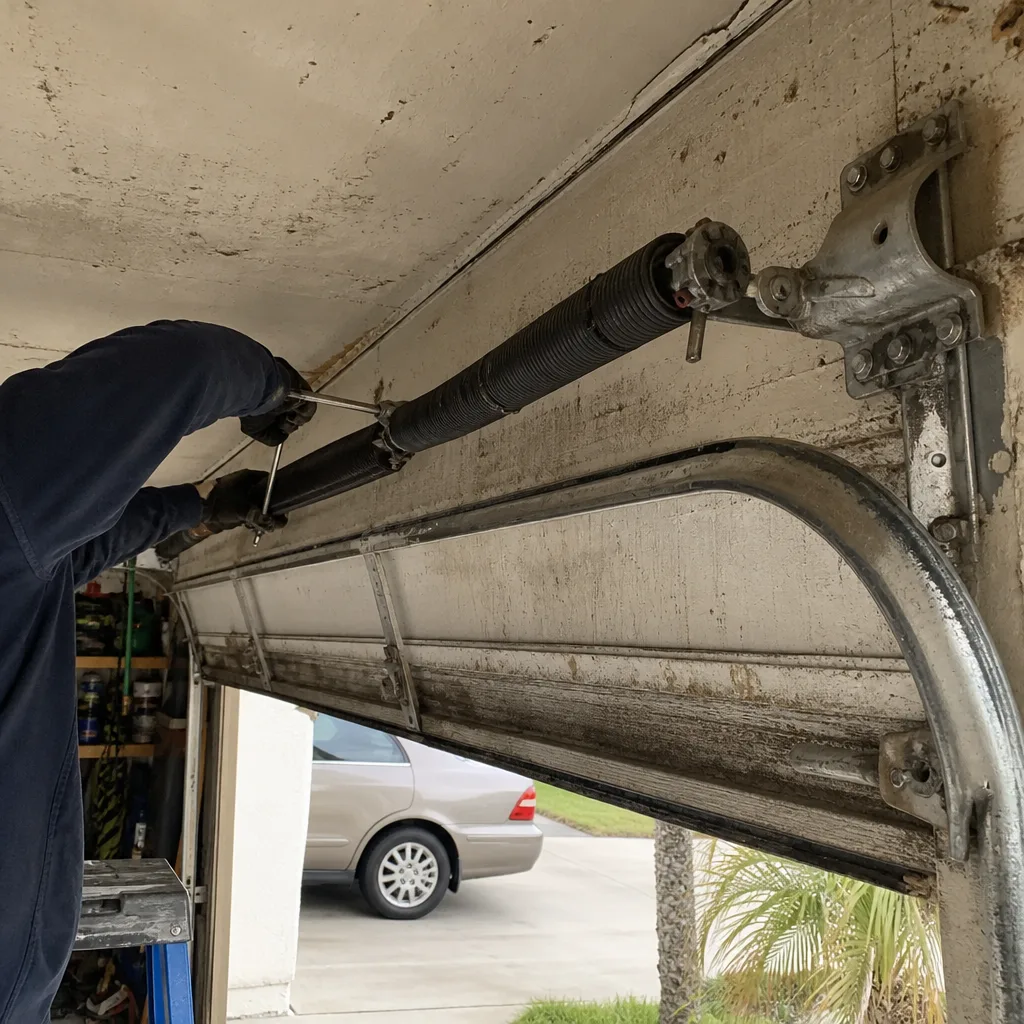 Before
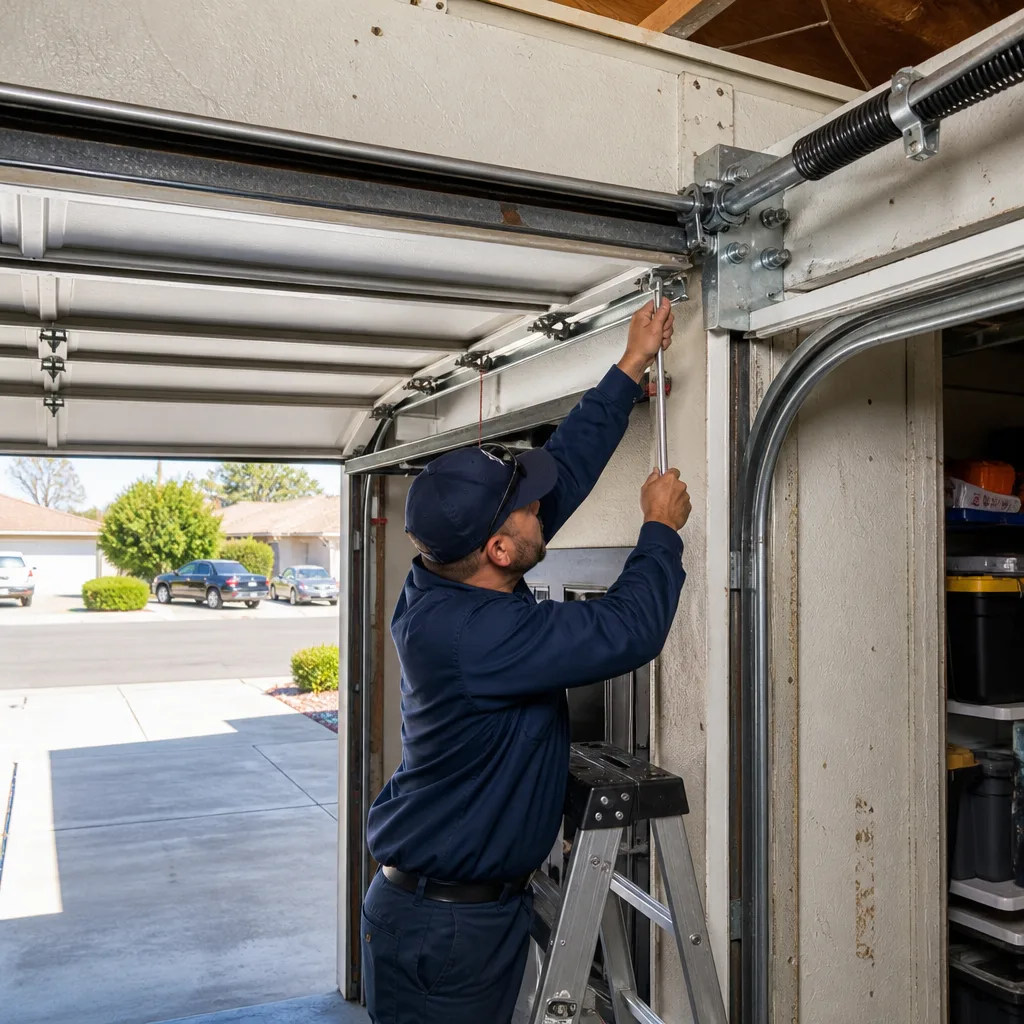 After
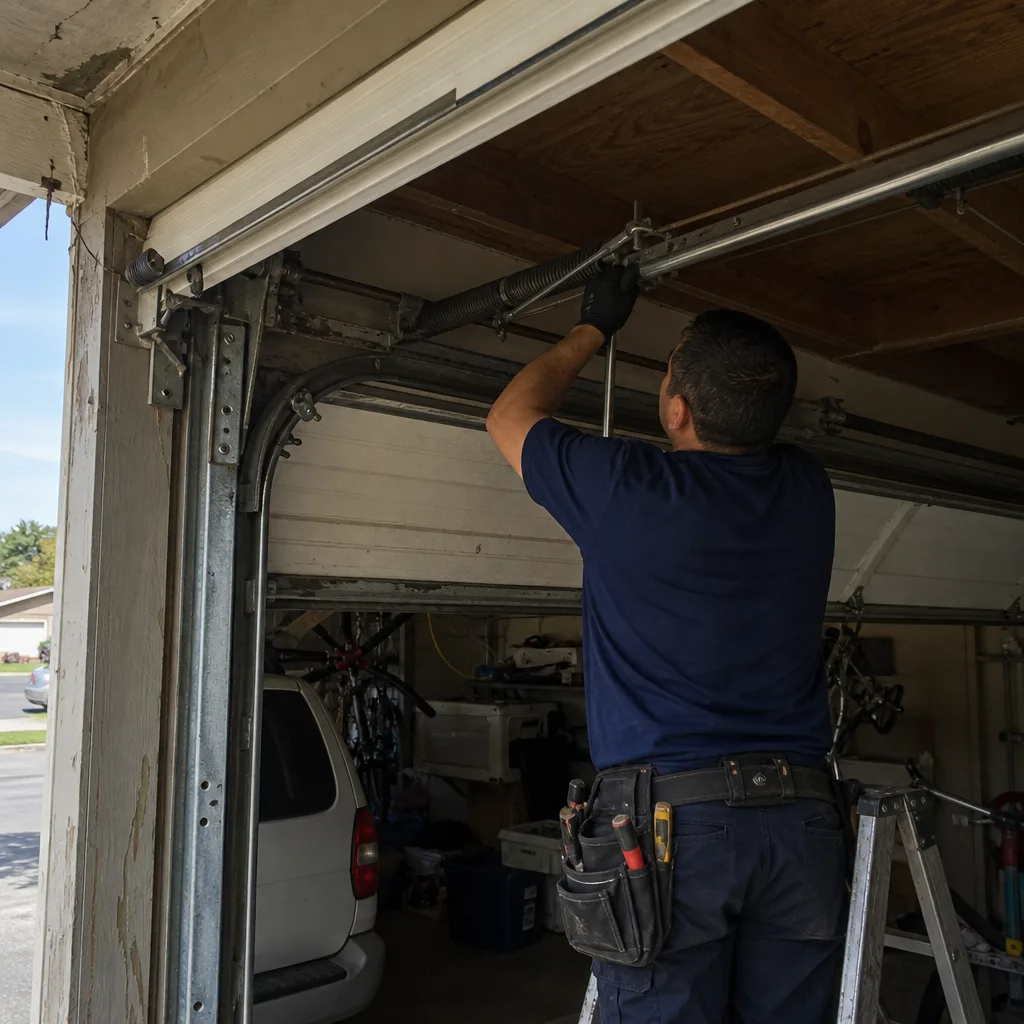 Before
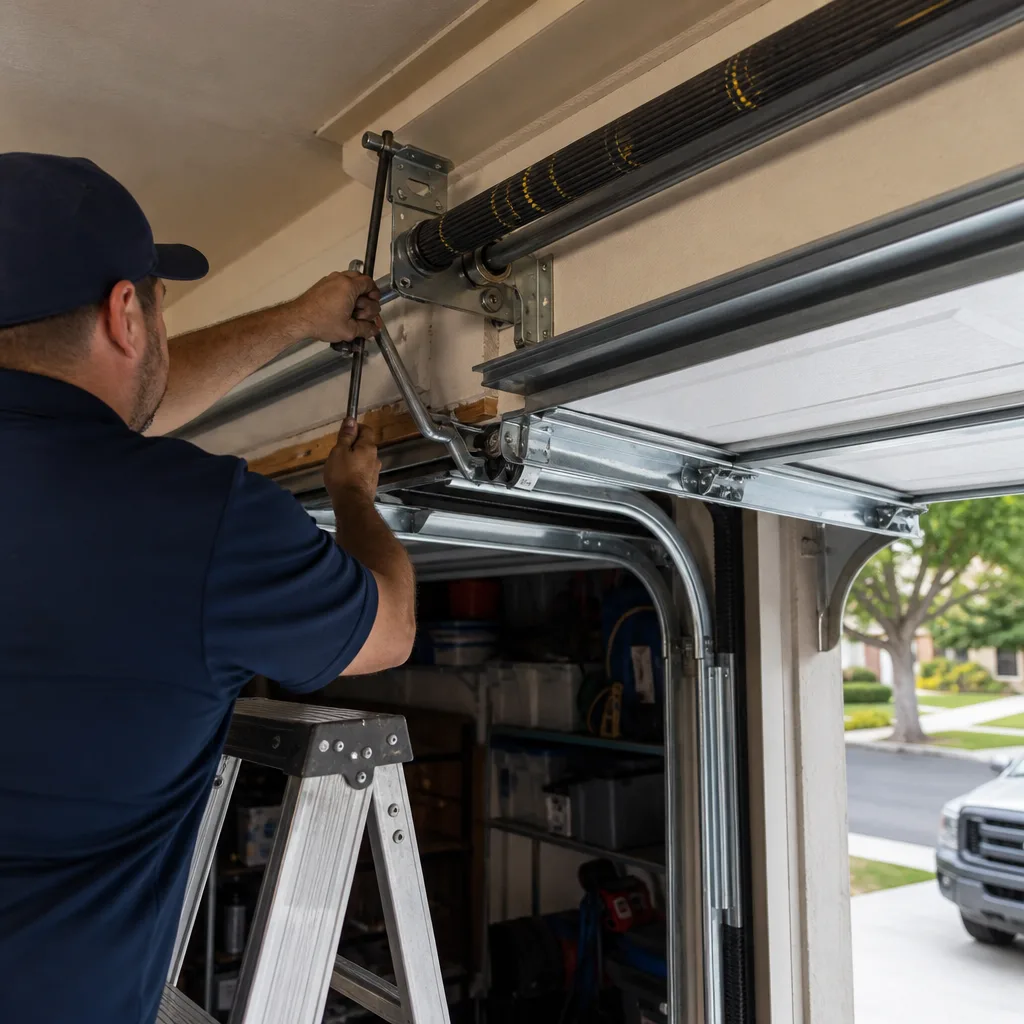 After
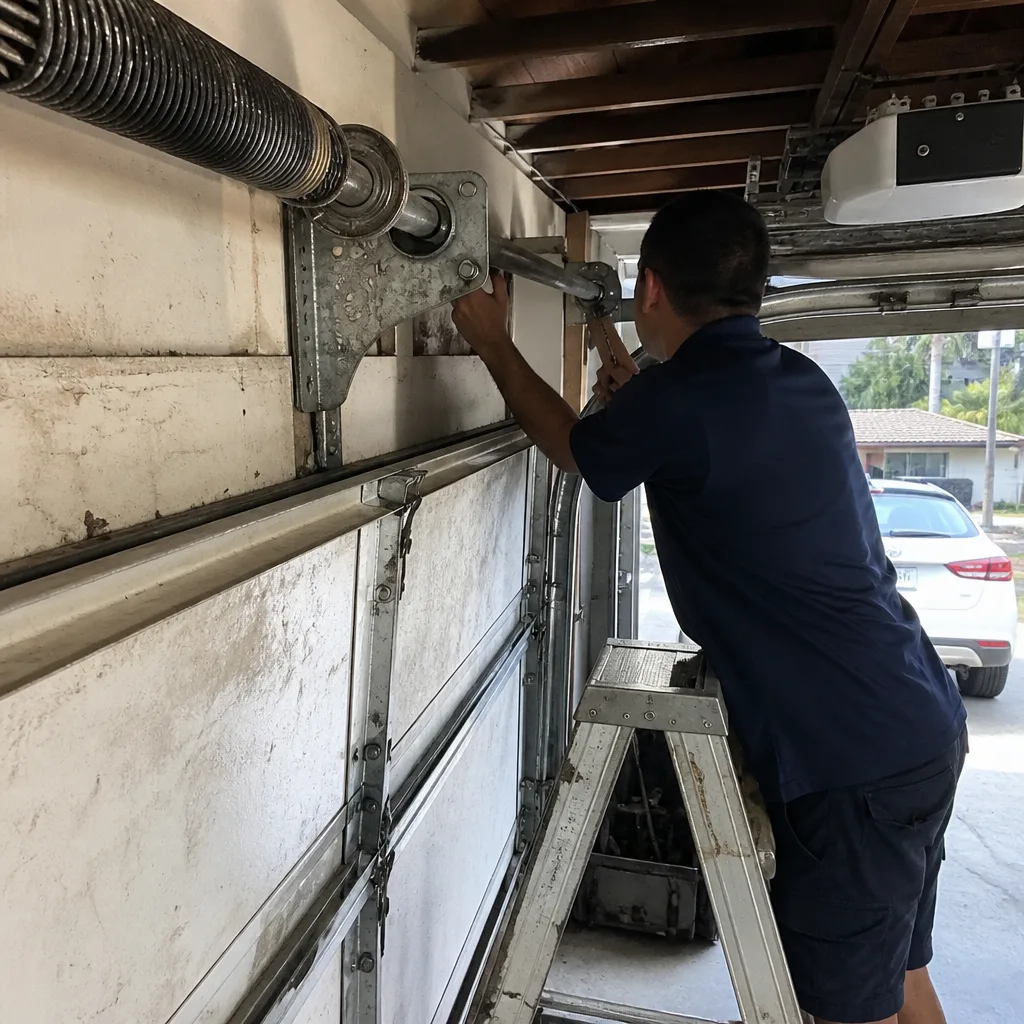 Before
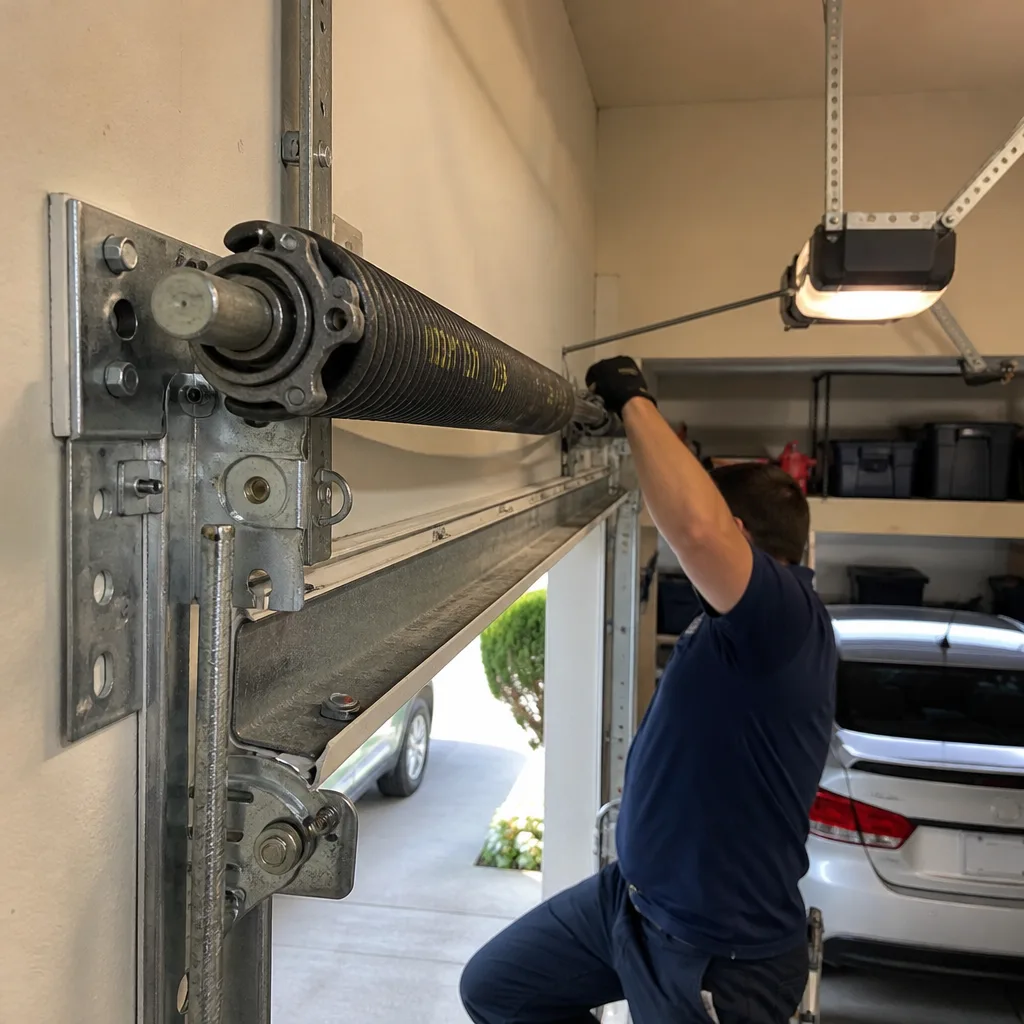 After
When to Call a Professional
Call a professional when the warning sign involves load-bearing components, electrical controls, or anything that a mistake would make worse. A broken torsion spring, a snapped cable, a bottom bracket with visible rust, an opener that’s reversing due to track deflection, or any repair on a high-tension spring system all fall into this category. These are not projects where trial and error is safe or cost-effective on a Huntington Beach garage door. If you’ve done the basic checks, the sensors are clean, the seal is seated, and the door is still misbehaving, you’ve hit the ceiling of what a homeowner should attempt. Corner Post Garage Door Repair offers free estimates in Huntington Beach, and our technicians handle the full system from spring to opener, across all major brands, including garage door repair and garage door installation, so you’re not juggling separate contractors for the door and the motor. Call (833) 620-3836, and we’ll give you a straight diagnosis and a straight price.
Frequently Asked Questions
Spring replacement in Huntington Beach typically runs between $250 and $450 for a standard single spring, and between $350 and $650 for a dual-spring system, including the cost of the spring and the service call. The price varies by door size, spring type, and whether your springs are standard or a less-common specification. Call (833) 620-3836 for an exact quote; estimates are free.
In most cases, yes. We schedule same-day service for spring failures and other repair emergencies across Huntington Beach, from downtown to the Bolsa Chica side and everywhere between. Call (833) 620-3836 early, and we’ll get a technician out as quickly as the schedule allows.
No. We quote the repair price before any work begins, and that’s the price you pay unless we find something that requires a different repair and you approve it first. Nothing gets added to your invoice without your sign-off.
Yes. Our trucks are stocked with the springs, rollers, cables, hinges, sensors, and other common components that fail most often on residential garage doors in Huntington Beach. That includes parts compatible with major brands like Chamberlain, Genie, Clopay, and Amarr, so most jobs are completed during the first visit.
A quality steel garage door in Huntington Beach can last 15 to 20 years with regular maintenance, while springs typically last 7 to 10 years depending on usage and proximity to the coast. Doors closer to the water, where salt exposure is higher, will show hardware wear on the shorter end of those ranges.
A noisy door isn’t automatically dangerous, but it’s a signal that something is changing. Grinding indicates failing rollers that could score your tracks. Popping can signal binding hinges or shifting springs. In Huntington Beach, where corrosion accelerates wear, addressing the noise early usually prevents the dangerous failure that comes later. Call (833) 620-3836 and describe the sound. We’ll tell you whether it needs attention now or can wait.
The Bottom Line
Huntington Beach garage doors face conditions that inland doors don’t: salt air, marine humidity, and sun exposure that stress hardware in specific, predictable ways. The warning signs are there, but they’re easy to misread. A slower door means spring fatigue. Chalky white residue means active corrosion. A door that reverses at the same spot means track deflection, not sensor failure. Learn to catch these early, and you’ll replace springs instead of entire doors, rollers instead of tracks, and weather seals instead of dealing with the damage that follows their failure. We work on your brand, not around it. Eight major brands. One call: (833) 620-3836.
Written by the team at Corner Post Garage Door Repair, serving Huntington Beach since 2015.