
Last updated October 30, 2026
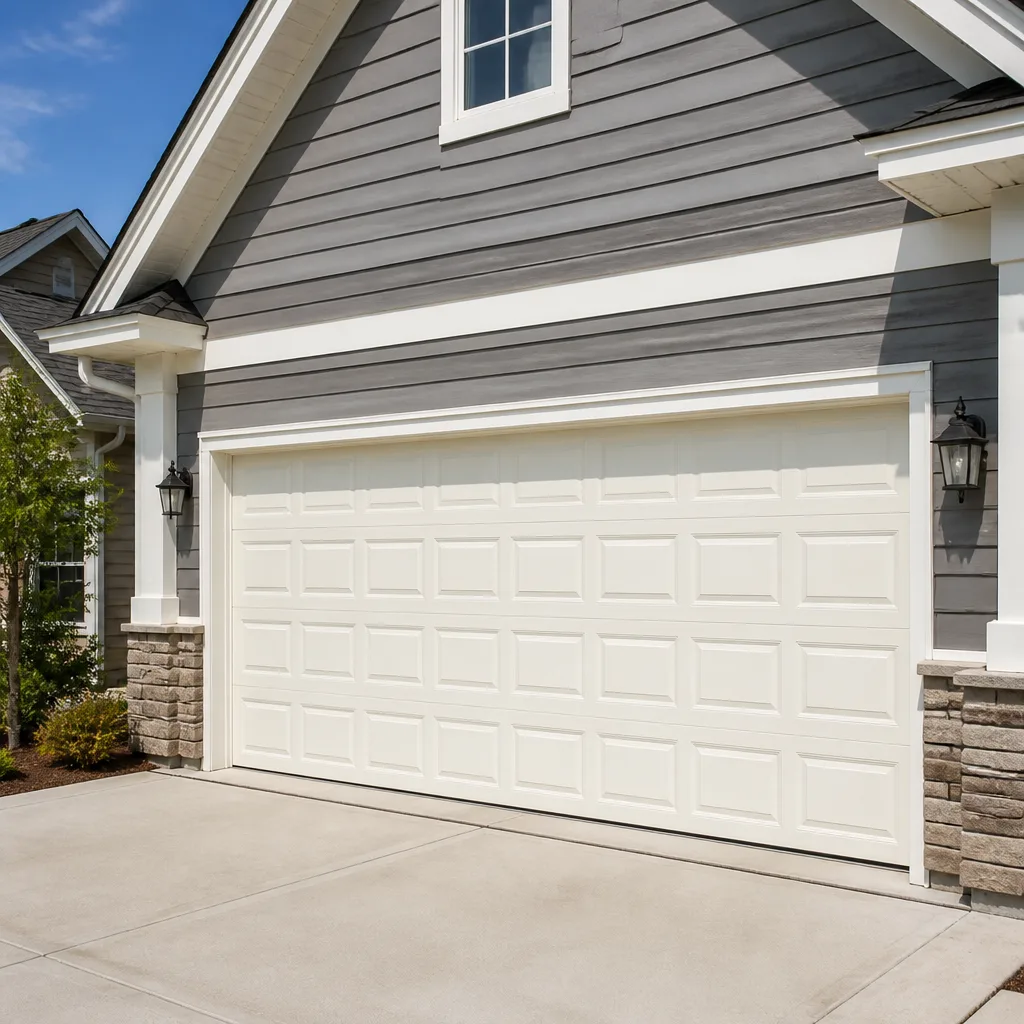 Raised-panel steel
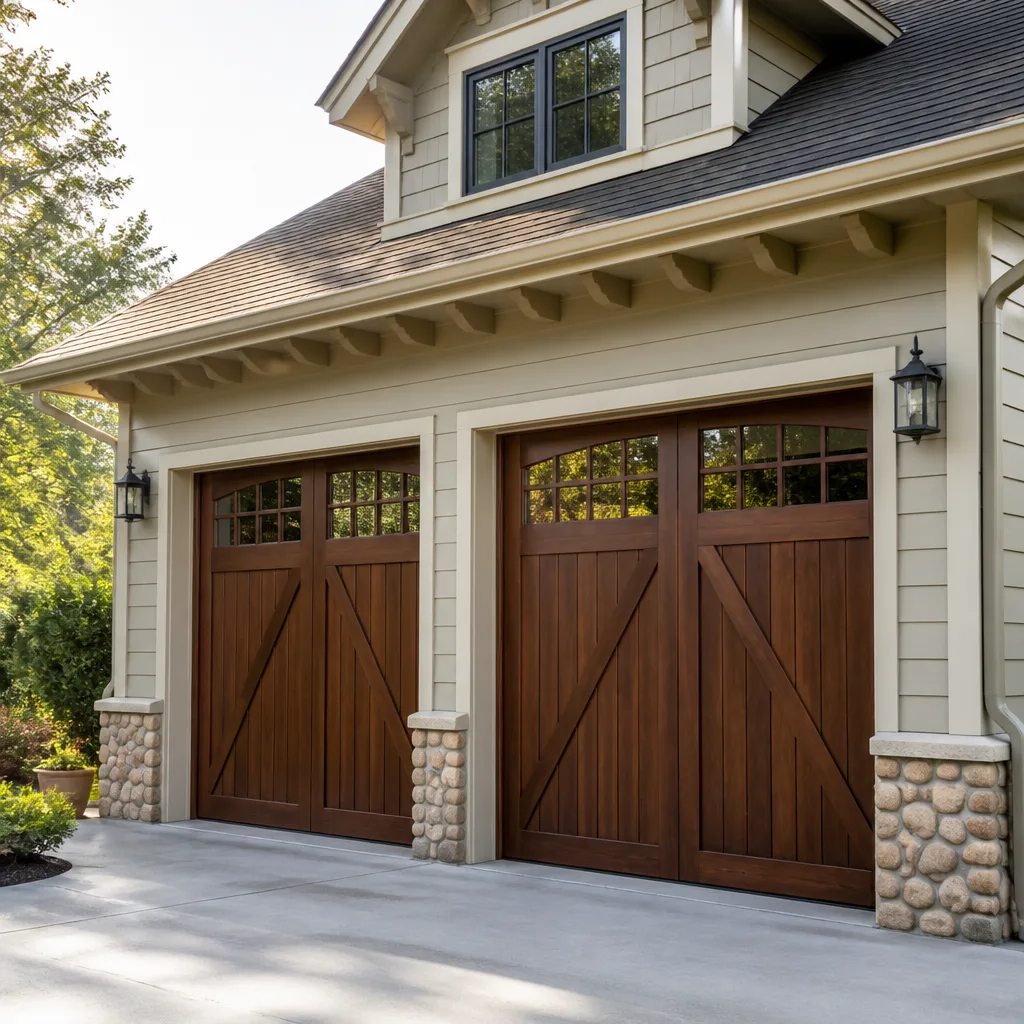 Carriage house
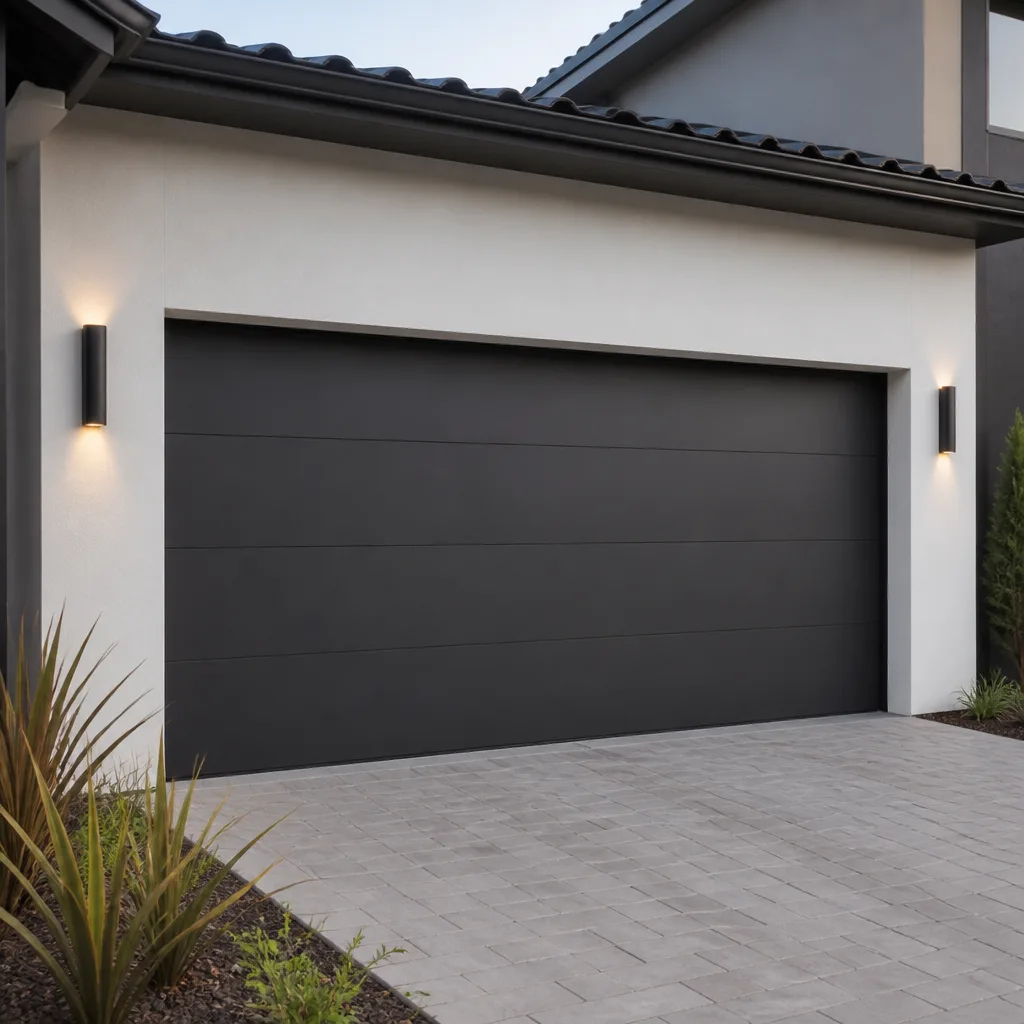 Modern flush
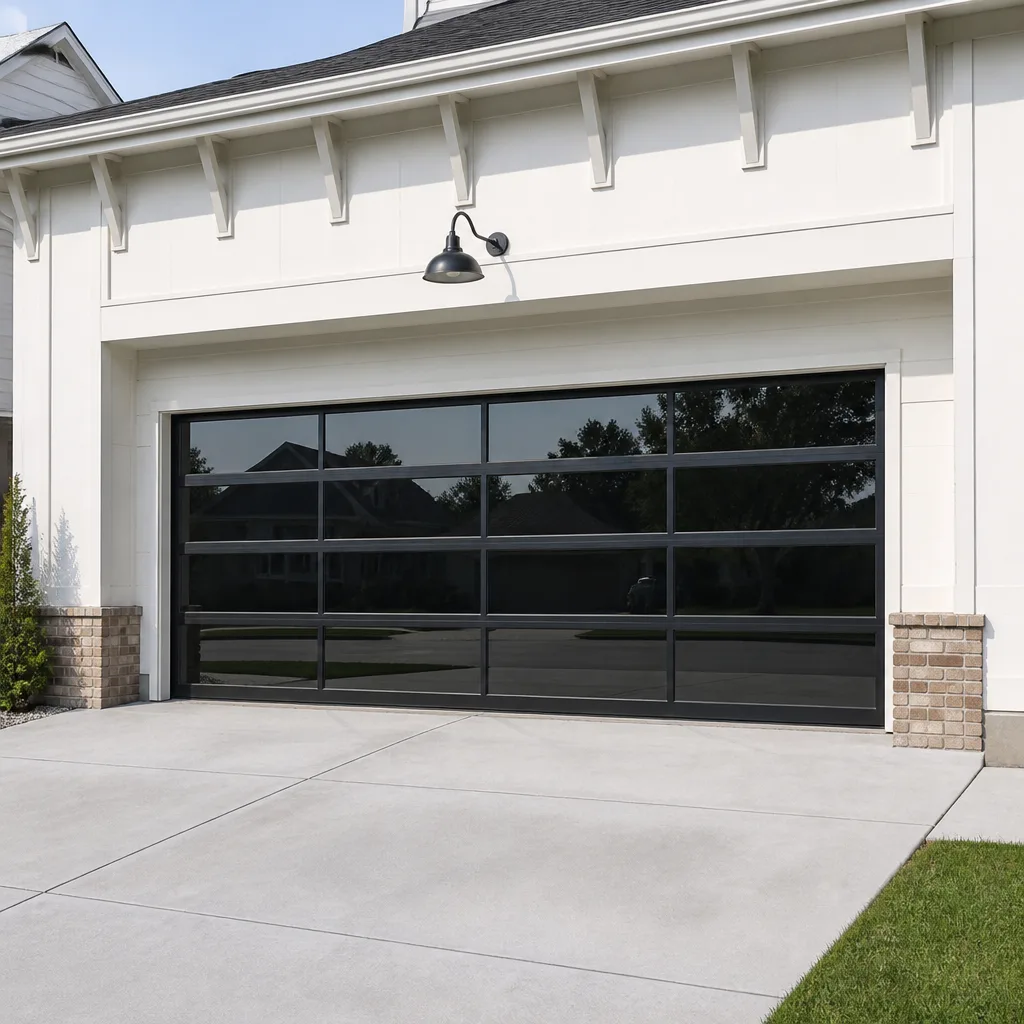 Full-view glass
 LiftMaster openers
 Chamberlain openers
Full 25-point door and opener safety check with every visit - springs, cables, rollers, tracks, and your LiftMaster or Chamberlain opener included
You get a price before we start. It does not change when the truck arrives.
Get your free estimateDIY vs Professional Garage Door: The Huntington Beach Homeowner’s Decision Guide
Every year in the United States, roughly 20,000 people end up in emergency rooms from garage door injuries. Torsion springs, the big coiled ones mounted above the door, hold between 130 and 250 foot-pounds of torque apiece. When one snaps, it does not sag politely. It unwinds in a fraction of a second, and anything in the way gets hit with enough force to break bone. That is not a scare tactic. It is the reason this guide exists. We are going to walk you through exactly which garage door tasks a Huntington Beach homeowner can handle on a Saturday morning, which ones demand a trained technician, and why some of the middle-ground jobs will cost you more in failed attempts than a service call would have. This is the decision guide we wish every homeowner read before touching their door.
Styles & brands we work with
Quick Answer
Most Huntington Beach homeowners can safely handle five basic garage door tasks: sensor realignment, lubrication, remote programming, weatherstrip replacement, and monthly visual inspections. Anything involving torsion springs, cable replacement, door panel realignment, or opener motor repair should be left to a professional, because those components are under load even when the door is closed, and mistakes there cause real injury and can void your homeowner’s insurance coverage in California. For everything in between, the decision comes down to your mechanical experience, your tool inventory, and whether salt-air corrosion has made the hardware unsafe to work on.
Table of Contents
- The Definitive DIY Task List: What You Can Actually Handle
- The Hard Line: What Requires a Professional
- The Gray Zone: Tasks Where the Right Call Depends on You
- Real Cost Comparison: When DIY Saves Money and When It Does Not
- The Coastal Factor: Why Huntington Beach Salt Air Changes the Equation
- How to Assess Your Own Skill Level Before You Start
- The California Liability Angle No Online Tutorial Mentions
- Common Mistakes to Avoid
- When to Call a Professional
- Frequently Asked Questions
- The Bottom Line
The Definitive DIY Task List: What You Can Actually Handle
Before we build the list, let us be clear about what qualifies. A safe DIY garage door task is one where the part you are touching is not under spring tension or cable load when the door is in the down position. If you can reach the component without a spring or cable moving it unexpectedly, you are working in safe territory. Most of these jobs take under an hour and require tools you probably already own.
Here is what a mechanically average Huntington Beach homeowner can do without hesitation:
- Photo-eye sensor realignment: The small sensors near the floor on each side of the door get bumped by bicycles, trash bins, and surfboard racks. If your door refuses to close and the lights blink, a sensor is out of line. Loosen the wing nut, adjust the sensor until the small LED stays solid, tighten. Ten minutes.
- Lubrication: Use a silicone-based spray or white lithium grease on the hinges, rollers, and bearing plates. Do not use WD-40. It is a solvent, not a lubricant, and it strips the grease that keeps your door quiet. Huntington Beach’s salt air means you should do this every four months instead of the six-month interval inland guides recommend.
- Remote and keypad programming: Every opener brand has a published programming sequence. Genie, LiftMaster, Chamberlain, Craftsman: the steps are in the manual or on the manufacturer’s site. This never requires opening the motor housing or touching a wire.
- Bottom weatherstrip replacement: The rubber strip along the bottom of your door wears out every three to five years in coastal conditions. You’ll notice daylight under the door or water pooling inside the garage after winter storms. The new strip slides into the retainer channel. No springs involved.
- Monthly visual inspection: Walk the door while it moves. Listen for grinding. Watch for jerky movement. Look at the cables for fraying. Look at the spring for gaps. This costs nothing and prevents a lot of emergency calls.
None of these tasks put you within striking distance of a loaded spring. All of them extend the life of your door and keep small problems from becoming service calls. If you do these five things consistently, you are already ahead of most Huntington Beach homeowners.
The Hard Line: What Requires a Professional
Now the other side of the line. These are the tasks where the physical risk is not the only factor. There is also a real chance of making the door unsafe in a way you cannot see until it fails.
- Torsion spring replacement: The door’s weight, usually 150 to 250 pounds for a double-wide, is counterbalanced by springs wound to match. When a spring breaks, the remaining spring is still under full load, and the winding cone on the broken spring may still be loaded on one side. Replacing one requires winding and unwinding the new spring with steel winding bars while standing on a ladder. If a bar slips, it becomes a projectile. This is the leading cause of garage door injuries nationwide. Do not do this yourself.
- Extension spring replacement: Older doors in Huntington Beach neighborhoods built in the 1970s and 1980s often have extension springs running along the horizontal tracks. They are less concentrated in force than torsion springs, but they still hold enough energy to break a hand, and they must be paired with a safety cable installed through the center. Get that wrong and a broken spring turns into a flying metal hook.
- Cable replacement: The lift cables work in tandem with the springs. They are under constant tension. If one snaps while you are working, the loose end can whip. Replacing cables also requires releasing spring tension safely, which brings you back to the same danger zone.
- Door panel replacement or section realignment: This sounds like simple carpentry, but a sectional door is a connected system. If a panel is out of alignment, the door can bind, jump a track, or put uneven load on the springs. You can easily fix the visible issue and cause a hidden one.
- Opener motor or logic board replacement: Diagnosing whether a dead opener needs a new gear, a new circuit board, or a new motor requires opening the unit and testing components. Most manufacturers void the warranty if a non-authorized person has opened the housing.
For these five, the answer in Huntington Beach is the same as it is anywhere else: hire a professional who works on doors daily. It is not about skill level. It is about the fact that a spring under load does not care how carefully you are working.
The Gray Zone: Tasks Where the Right Call Depends on You
Between the easy list and the hard-line list sits a middle group. These jobs are not inherently dangerous the way spring work is, but they require enough mechanical sense and patience that many homeowners end up paying more to fix their mistakes than the professional would have charged in the first place.
- Roller replacement: If you have a door with cheap metal rollers, swapping them for nylon ones quiets the door noticeably. On some doors the bottom roller is attached to the lift cable, which means removing it involves releasing cable tension. On other doors, all rollers are accessible by bending the track slightly. You can do this safely if you know which type of door you have and understand that the bottom roller is never the one to start with. If you cannot identify your door’s configuration, stop.
- Track adjustment and tightening: A garage door that shudders or rubs on one side often has a loose or misaligned track. The fix is usually loosening the track bolts, repositioning, and re-tightening with a level. The risk is that the track brackets are attached near the spring mounting pads, and heavy contact with the wrong spot can jolt the door. This is a two-person job at minimum.
- Opener remote range issues: Intermittent remote function in Huntington Beach is often caused by LED bulbs interfering with the opener’s receiver, or by a logic board starting to fail. The bulb fix is free. The board fix is not. Knowing which is which takes diagnostic experience.
- Weather seal replacement along the sides and top: This is another weatherstrip job, but the side seals require nailing or screwing into the jamb, and doing it wrong means drilling into the door track. It is not dangerous, just finicky, and many homeowners end up with gaps that let the ocean breeze whistle through.
Our rule of thumb: if you can explain what the part does and why it needs to be changed, you can probably handle the gray-zone jobs. If you are following a YouTube video step by step without understanding what each step accomplishes, you are not ready for the middle tier.
Real Cost Comparison: When DIY Saves Money and When It Does Not
The financial case for DIY is not as simple as “parts cost less than labor.” For a detailed breakdown, see our Garage Door Cost Breakdown: The Huntington Beach Homeowner’s Reference for 2026, and let us look at the actual numbers in Huntington Beach’s market as of 2025, and where the hidden costs sit.
Where DIY genuinely saves money:
- Sensor realignment: Free if you do it yourself. A service call for this in Huntington Beach typically runs $75 to $125 just for the trip charge. Every homeowner should know how to do this.
- Lubrication: A can of silicone spray costs $8 to $12 and lasts a year. A professional lubrication service is often bundled with an inspection and runs $60 to $90. If you are on a budget, do this yourself.
- Remote programming: Zero cost to DIY. A technician will often do this for free if they are already on site, but a standalone call will run you the minimum service fee.
- Bottom weatherstrip: The material costs $15 to $40 depending on your door width and whether you need a retainer. A professional replacement is usually $80 to $130 including parts. An hour of your time nets a $60 to $90 saving.
Where DIY usually costs more in the end:
- Roller replacement: A full set of quality nylon rollers costs $20 to $35 online. But if you bend the track while prying rollers out, or if you pull the bottom roller without releasing cable tension first, you are now fixing a cable or track problem. Our team has repaired doors in Huntington Beach’s Huntington Harbour and Seacliff neighborhoods where a $30 roller job turned into a $250 track repair because the homeowner used a pry bar on the wrong point.
- Track adjustment: If you get a track loose and cannot get it re-squared, the door will bind and put uneven strain on the opener. An unbalanced door shortens opener life substantially. The repair is often more than the service call would have been.
- Opener diagnosis: Replacing a $40 capacitor to fix a dead opener sounds smart until the new capacitor does not fix it because the problem was a $15 gear. You have now spent $40 and still need a technician. We see this monthly with homeowners who guessed wrong on a Genie or LiftMaster unit.
The honest math: DIY wins on the easy list, loses on the hard line, and splits on the gray zone depending on your mechanical intuition. If you are unsure which side of the line a specific job falls on, call us at (833) 620-3836 and describe what you are seeing. We will tell you over the phone whether it is a safe DIY project or something that needs a truck. The estimate is free either way.
The Coastal Factor: Why Huntington Beach Salt Air Changes the Equation
Huntington Beach is not a typical garage door market. Homes within two miles of Pacific Coast Highway live in a salt-laden environment that accelerates corrosion in ways a YouTube tutorial filmed in Phoenix will never account for. Here is what that means in practice for any DIY attempt.
First, fasteners seize. The bolts holding your track brackets, hinge plates, and spring pads have spent years in damp, salty air. They develop a bond of rust that makes them far more likely to shear off than to turn when you apply torque. A homeowner with a standard socket set will frequently snap the head off a rusted bolt, and now the bracket cannot be reattached without drilling and tapping. That is a hole you did not want to be in, and it is a repair that requires tools most households do not own.
Second, torsion spring rust is harder to see. A spring can look solid on the surface while micro-corrosion has already started on the inner coils. This matters because a rusted spring has a shorter life, and if you are working anywhere near a spring that already has corrosion, the margin for error is thinner. In our experience with Huntington Beach doors, springs installed in coastal garages within a mile of the water fail about 20 to 30 percent sooner than the same spring would inland.
Third, opener rail and chain corrosion affects performance in ways that mimic electrical problems. A chain drive opener with rust on the chain will strain, produce hot spots on the motor, and eventually trip the thermal overload. The homeowner sees an opener that “works sometimes” and assumes a board issue. The actual fix is rail lubrication or chain replacement. If you do not know the difference, you will replace parts you did not need to.
The coastal corrosion factor is the single biggest reason a Huntington Beach homeowner should be more conservative about DIY garage door work than someone in, say, Temecula. The hardware is older than it looks, and older hardware fails harder.
How to Assess Your Own Skill Level Before You Start
Before you pick up a wrench, run yourself through this five-question evaluation. Be honest. The goal is not to discourage you from doing the easy tasks. It is to make sure you do not wander into the hard ones by accident.
- Do you know where the spring tension is on your specific door? If you cannot look at your garage door and immediately identify whether you have torsion springs, extension springs, or a spring-free rear-mounted system, you are not ready for any task beyond the easy list. Knowing this is the floor.
- Can you explain what the part you want to replace actually does? If the answer is “it makes the door go up and down,” that is not enough. If you can explain that the rollers guide the panels through the track while the hinges connect the sections, you are ready for the gray zone. If not, stay on the easy list.
- Do you own the right tools, including backup bits? A standard socket set is not the same as a deep-well set with a breaker bar. In coastal Huntington Beach, you need penetrating oil, a torch for stubborn bolts, and a drill with cobalt bits for the ones that shear anyway. Each missing tool raises the chance of a half-finished job.
- What is your plan if the job goes wrong? If the answer is “call someone,” that is a fine answer. But it means you should weigh the DIY savings against the cost of an emergency service call, which in Huntington Beach runs higher on nights and weekends. If you do not have a fallback plan, you do not have a plan.
- How much time do you actually have? A job that takes a technician 45 minutes can take a first-timer four hours. If your Saturday is the only time you have, and you lose the afternoon, the money you saved no longer looks like savings. Be realistic about the time cost.
Score yourself honestly. If you aced all five, you can handle most of the gray zone. If you were shaky on two or more, stick to the easy list and let a specialist handle the rest. Corner Post Garage Door Repair covers the full spectrum from garage door repair to opener repair to complete new installations, so whatever you decide not to tackle, one call covers it.
The California Liability Angle No Online Tutorial Mentions
Here is something most garage door DIY content skips entirely: who is responsible when a self-repaired door fails and hurts someone. For the full legal picture, read our Garage Door Permits, Codes & Inspections in CA: What You Need to Know. In California, this is not a theoretical question.
If you replace a torsion spring yourself and the door later fails, injuring a family member or a neighbor, your homeowner’s insurance provider will investigate the work. Most standard California policies cover sudden and accidental events, including garage door failures, regardless of who repaired the door. But if the insurer determines the loss was caused by faulty workmanship, especially work performed by an unlicensed homeowner on a component that a reasonable person would know requires professional installation, they can argue the damage was not “sudden and accidental” but the predictable result of negligent maintenance. That is a denial of coverage.
If you hire an unlicensed handyman to do the same work and something fails, your exposure is worse. California law holds the property owner responsible for ensuring that any contractor performing work valued over $500 holds a valid license. If your door injures someone and the work was done by an unlicensed person, the burden of proof shifts toward you in any court proceeding. This is not a nuance. It is how the state structures liability.
The practical takeaway for Huntington Beach homeowners: any task on the hard-line list should be done by a licensed professional. The money you save on a spring replacement is not worth finding out how your insurance company interprets the term “workmanship” after an accident. When you hire a specialist, ask whether the company is licensed and carries appropriate coverage. Reputable firms answer that question directly. Corner Post Garage Door Repair is a licensed residential garage door specialist, and we carry the coverage expected of a company working in people’s homes.
Common Mistakes to Avoid
- Using WD-40 as a lubricant. This is the single most common mistake we see in Huntington Beach garages. WD-40 cleans and frees rusted parts, but it dissolves the lubricant your hinges and rollers need. A door sprayed with WD-40 will run great for two weeks and then grind harder than before. Use silicone spray or white lithium grease.
- Ignoring a fraying cable. A cable with one broken strand will not fix itself, and the remaining strands are now carrying extra load. In a salt-air garage, that failure point accelerates. When you see fraying, stop using the door daily and call a professional. The door can come off its track if the cable snaps while operating.
- Adjusting the spring without winding bars. Every year someone tries to wind a torsion spring with screwdrivers or, worse, ratchet extensions. Those tools are not made for that load. They bend, slip, and become projectiles. Even a professional never touches a torsion spring without the correct winding bars.
- Replacing one spring instead of both. Torsion springs are rated for a certain number of cycles, and they are almost always installed in pairs. If one breaks, the other is at the end of its life. Replacing only the broken spring means paying for labor twice and ending up with an unbalanced door in the interim.
- Pulling the red emergency release cord while the door is up. That cord disconnects the opener so you can operate the door manually. If the door is up when you pull it, and your springs are weak or broken, the door comes down with nothing resisting its weight. Always disconnect with the door fully closed, unless you are in a true emergency.
- Buying universal parts and hoping they fit. Not every roller fits every track. Not every remote is compatible with every opener. Huntington Beach homes carry a wide mix of brands: Clopay doors with Genie openers, Amarr doors with Chamberlain motors, Wayne Dalton setups from the 1990s. Match the part to your actual hardware, not to what is on sale at the local store.
When to Call a Professional
You should pick up the phone when any of these is true: you have a broken torsion or extension spring, a frayed or slipped cable, a door that is off its track, a panel that is cracked or buckling, or an opener that is dead and you cannot identify the failed part within ten minutes of visual inspection. Also call if your door has not been serviced in more than two years and you live within two miles of the coast, because the salt air has had time to work on your hardware. Corner Post Garage Door Repair offers free estimates in Huntington Beach. Call (833) 620-3836 and we will tell you what the fix requires and what it will cost before any work begins.
Frequently Asked Questions
Torsion spring replacement in Huntington Beach typically runs $180 to $340 for a single spring, and $260 to $480 for a pair, including parts and labor, depending on the spring size and cycle rating. Extension spring replacement is usually $140 to $280. These are the prices for professional replacement in this market as of 2025. Call (833) 620-3836 for an exact quote on your door.
You can, but you should not. Torsion springs hold enough stored energy to cause severe injury or death if the winding bar slips, and extension springs without a proper safety cable become a projectile if they snap. The risk does not change based on how many videos you have watched. This is the one garage door task we recommend no homeowner attempt.
Every four months is right for coastal Huntington Beach. Salt air draws moisture and accelerates drying of the lubricant that keeps your rollers, hinges, and bearing plates running smoothly. Inland homeowners can go six months. If you hear grinding or squeaking between intervals, lubricate immediately.
Intermittent operation in Huntington Beach garages usually points to one of three things: photo-eye sensors that are slightly out of alignment, LED bulbs interfering with the opener’s radio receiver, or a logic board that is starting to fail. Try the first two yourself. If the problem persists, the board is the likely culprit and that requires a professional diagnosis.
If the opener is 20 years old and the failure involves the motor, the logic board, or the gear assembly, replacement is usually the better call. A new opener costs $250 to $600 installed and includes safety features that were not standard two decades ago. The one exception is a clean failure of a single identifiable part, like a capacitor, on an opener that has otherwise run fine. Ask a technician for a straight answer before spending.
In most cases, replacing a garage door on an existing single-family home in Huntington Beach does not require a city permit, provided you are not changing the structural opening. If you are enlarging the opening or altering the header, that is different and does require city review. For a straight door replacement, you do not need a permit, but you do need a professional who installs to the manufacturer’s specifications.
The Bottom Line
Every Huntington Beach homeowner should own the easy list: sensor alignment, lubrication, remote programming, weatherstrip replacement, and monthly visual checks. Those five habits will keep your door running and save you hundreds in service calls over the life of your home. For help when emergencies strike, see our Garage Door Emergency Preparedness Guide for Huntington Beach Homes. The hard line is equally clear: springs, cables, panels, and opener motors are professional territory, not because of gatekeeping but because the physics and the liability do not care about your confidence. The gray zone is where you need to be honest with yourself about tools, time, and mechanical understanding. Whatever you decide to take on yourself, we are here for the rest. Corner Post Garage Door Repair works on the garage door you already have installed, not around it. We carry expertise on LiftMaster, Chamberlain, Genie, Clopay, Amarr, Wayne Dalton, Craftsman, and Raynor. One call covers the entire door system, from the spring to the opener.
When the job is beyond the easy list, call us at (833) 620-3836. You’ll get a straight diagnosis, an honest recommendation, and a price agreed before any work starts. For more on what we do, start at our Corner Post Garage Door Repair home and explore the full range of residential garage door services.
Written by the team at Corner Post Garage Door Repair, serving Huntington Beach since 2015.
See the difference
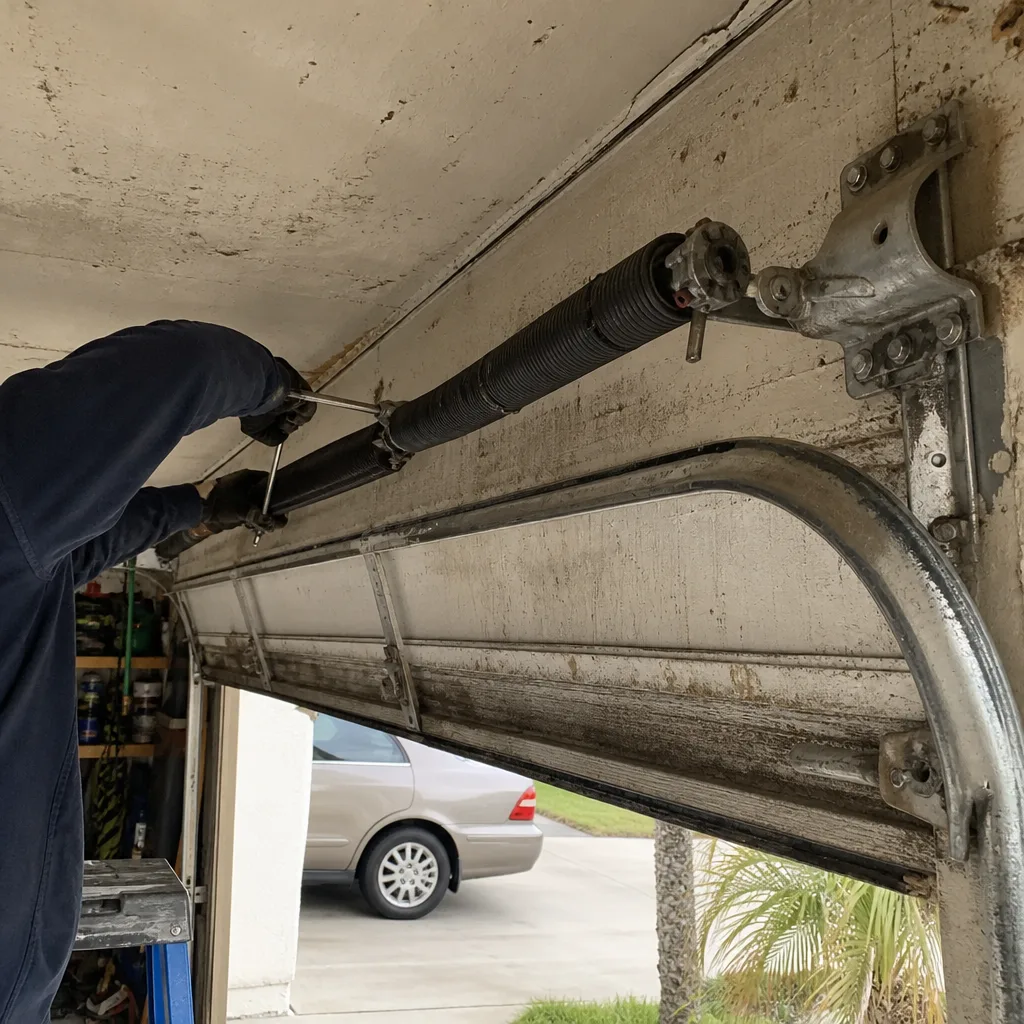 Before
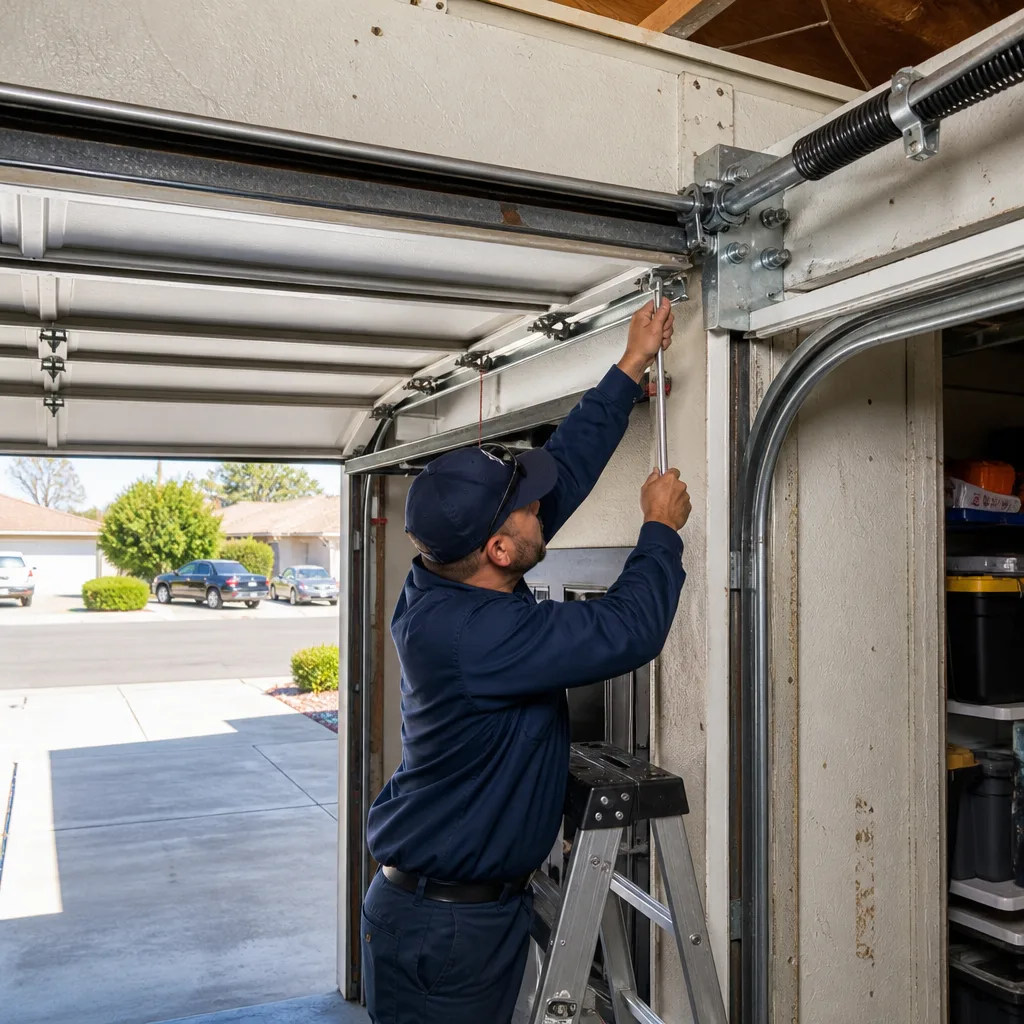 After
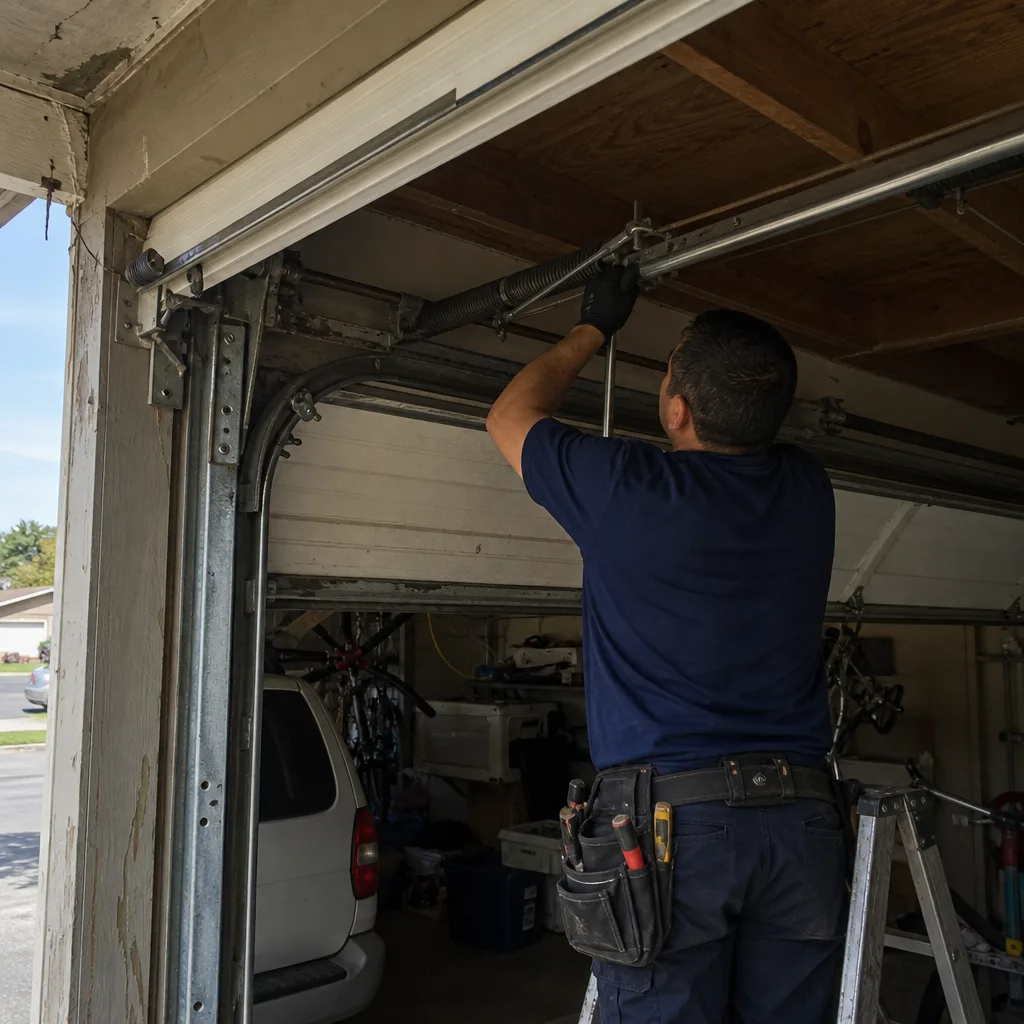 Before
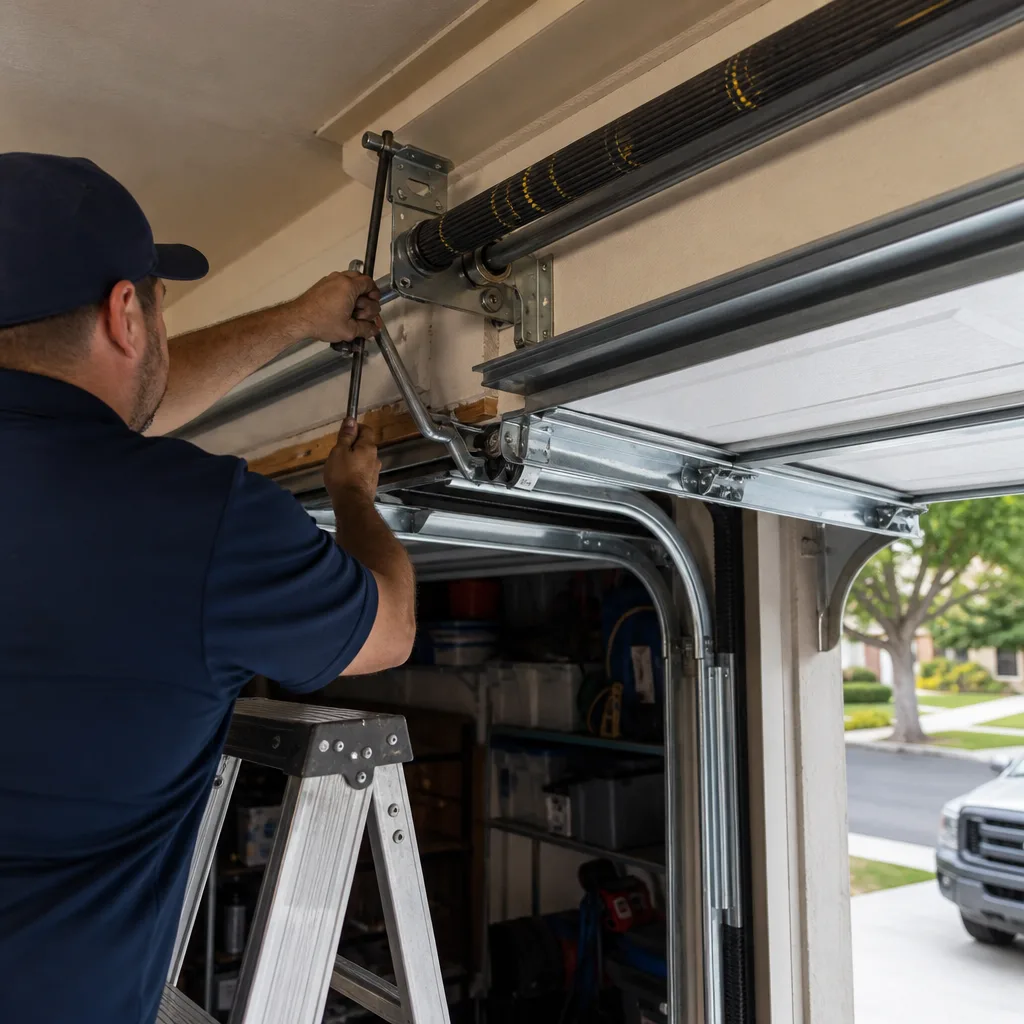 After
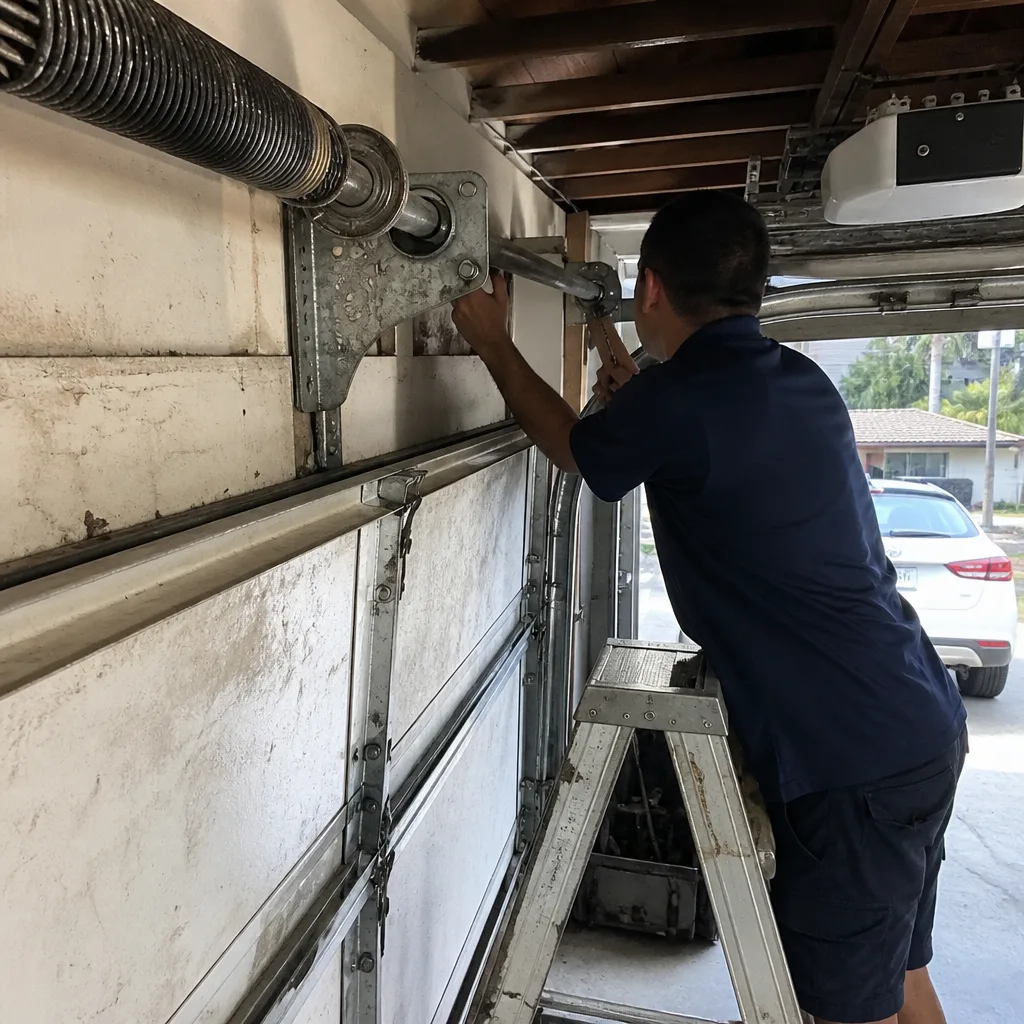 Before
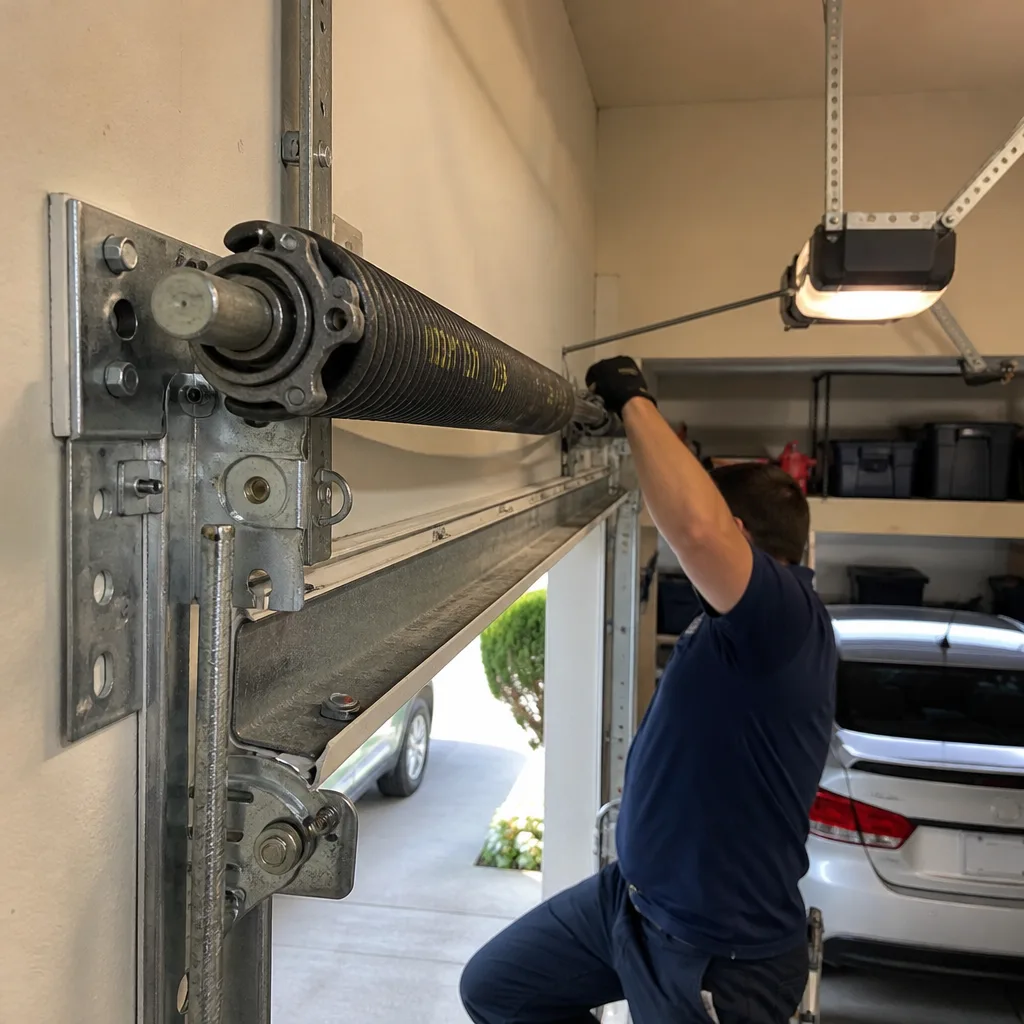 After